Translated with AI from the Russian original.
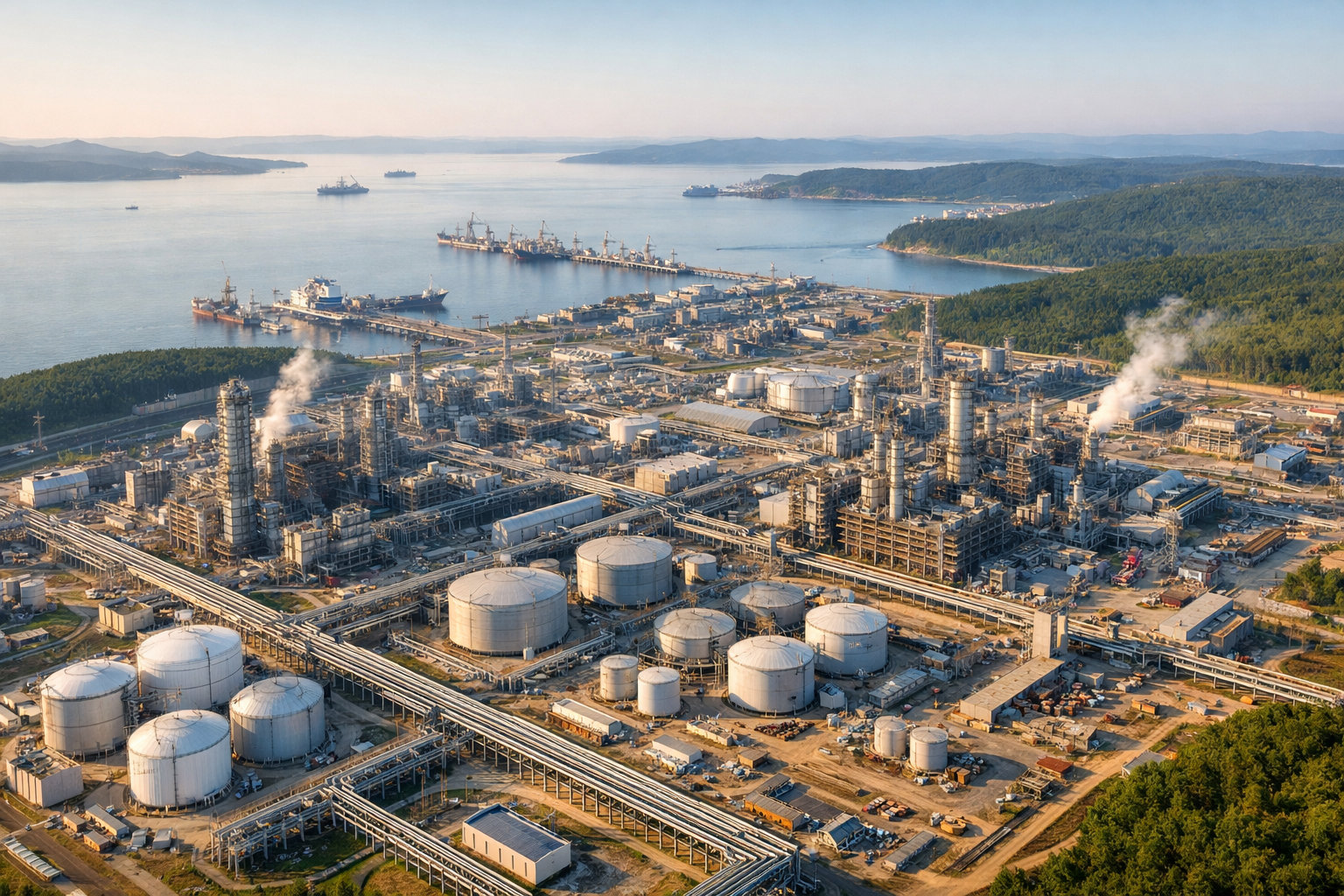
The government, with the participation of Rosneft, is discussing the revival of the Vostochnaya Neftyekhimicheskaya Kompaniya (VNKhK) project, a petrochemical complex near the port of Nakhodka. President Vladimir Putin instructed officials to consider the issue of state support for the project following a meeting on the development of the fuel and energy sector in the Russian Far East at the end of 2025, sources told the newspaper "Kommersant".
Rosneft had been trying to implement VNKhK since 2009, but in 2019 removed the project from its investment plan due to unprofitability. The stumbling block was tax incentives: the company failed to reach an agreement with the Finance Ministry, and the major tax maneuver, a gradual increase in the mineral extraction tax while zeroing out the export duty on oil, finally closed the issue. In 2016, Rosneft agreed with China's ChemChina to create a joint venture (60% to 40%), but the matter did not progress beyond negotiations. In October 2025, Energy Minister Sergey Tsivilev said that the project documentation was ready, but the company had postponed work because of macroeconomic uncertainty.
The project includes two phases: oil refining capacity of 12 million tons per year and petrochemicals output of 3.5 million tons. The site was expected to produce gasoline, aviation kerosene, diesel fuel, polyethylene, polypropylene, and other products. Total investment is estimated at 1.5 trillion rubles.
The need for the plant is driven by a chronic shortage of petroleum products in the Russian Far East: deliveries by rail from Siberia are unprofitable and take too much time. An alternative option, a pipeline from the Omsk Refinery about 7,000 km long and costing around 1 trillion rubles, was rejected due to the lack of funding sources and insufficient capacity at the refinery itself.
The key instrument of state support if the project is revived will likely be the reverse excise tax on oil and naphtha, experts believe. However, the economic situation and budget conditions have changed significantly since the last round of talks, making agreement on the support parameters a difficult task.
Rosneft, the Finance Ministry, and the Energy Ministry did not respond to the publication's inquiries.
Read more articles:
- OSK will build a new shipyard in Primorye: this was announced by the head of the Ministry for the Development of the Russian Far East on the sidelines of SPIEF 2025
- Construction of a new nuclear power plant will begin in Primorsky Krai in 2026
Never miss our newsAdd this site to your preferred sources to see us more oftenAdd on Google

















