Translated with AI from the Russian original.
Engineer Nikolai Kirillov presented his own design for a new rocket submarine with a combined power plant. The development is aimed at improving propulsion efficiency, engine life, and the controllability of the submarine both on the surface and underwater.
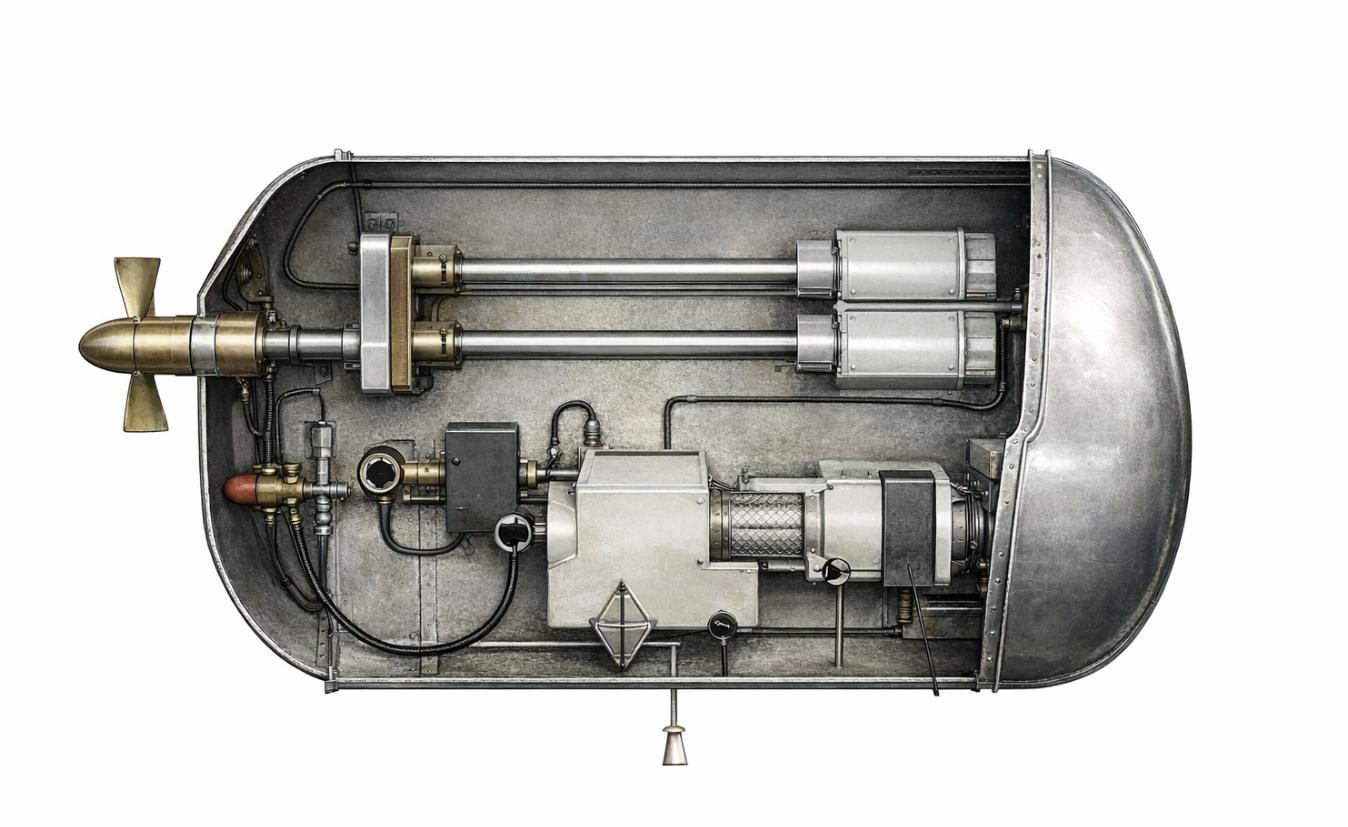
The solution combines a diesel cruising drive and an auxiliary low-power nuclear system; the patent has already been registered in the FIPS database.
The development is aimed at improving propulsion efficiency, engine life, and the controllability of the submarine both on the surface and underwater.
According to the concept, cruising mode is provided by a propeller shaft with a fixed-pitch propeller, connected through a gearbox and clutches to diesel engines. This makes it possible to keep the motors in an optimal mode and reduce wear. For economical underwater travel, a separate shaft with an electric motor and a controllable-pitch propeller powered by batteries is used.
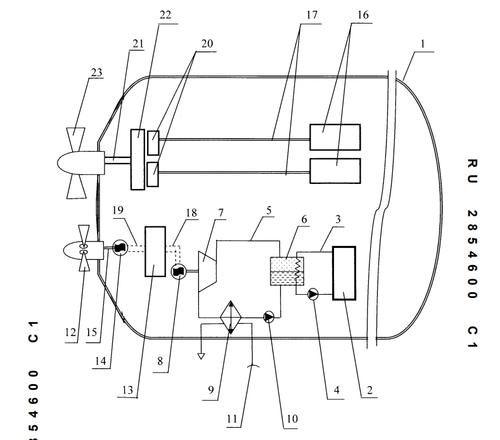
The key element is a two-circuit auxiliary nuclear power unit with a low-pressure water-cooled reactor and an organic Rankine cycle. It continuously generates electricity, recharges the batteries, and reduces the load on the diesel engines. Such a scheme increases reliability, improves speed regulation, and reduces environmental risks by isolating the radioactive circuit.
The combination of mechanical and electric drives makes it possible to flexibly distribute power, reduce fuel consumption, and increase the submarine's endurance without complicating operation.
Read more materials on the topic:
- Modernized and returned to service: the auxiliary boilers of the 70-year-old icebreaker \"Kapitan Belousov\" underwent a major overhaul
- On the Project 22220 nuclear icebreaker \"Leningrad\", units of the auxiliary boiler plant were installed
- Low-speed engines for ships will begin to be built in Russia
Never miss our newsAdd this site to your preferred sources to see us more oftenAdd on Google

















