Specialists from the North-Eastern Federal University (NEFU) named after Ammosov in Yakutia are starting to adapt parts for all-terrain vehicles operating in the Arctic zone, taking into account the summer conditions of the northern regions. This was announced by the Rector of the University, Anatoly Nikolaev.
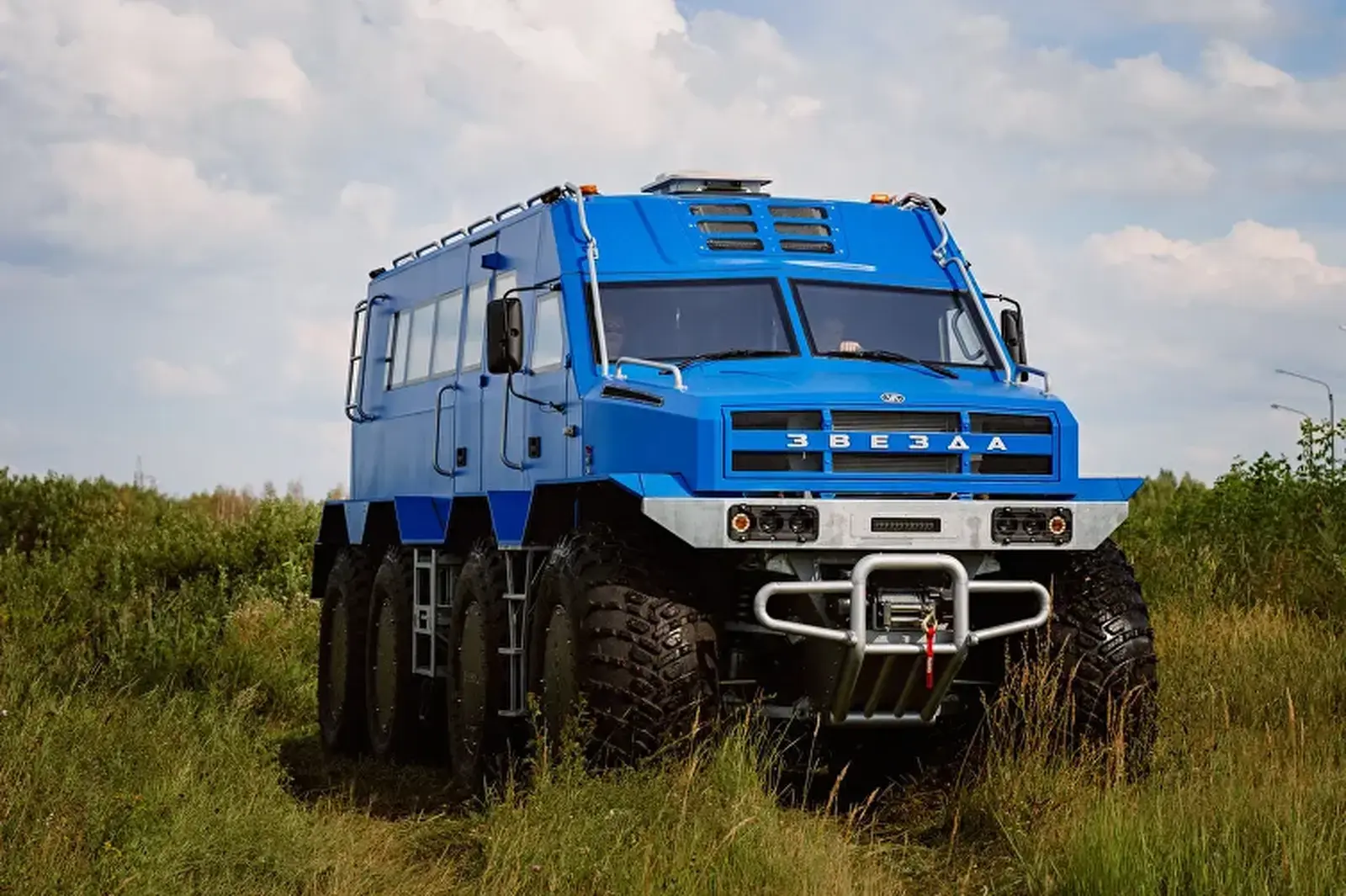
Recently, a long-term cooperation agreement was signed between NEFU and the company "Amphibious All-Terrain Vehicle Plant" ("Zvezda"), which occupies 10% of the Russian all-terrain vehicle market. The plant uses dust covers developed in the laboratory "Technology of Polymer Nanocomposites" of the Arctic Innovation Center of NEFU. In 2025, all-terrain vehicles equipped with parts from Yakutia successfully passed tests in the Chukotka Autonomous Okrug during the "Safe Arctic" exercises without a single failure.
One of the areas developed by the university over the past 20-30 years is the development and production of nanocomposite and rubber products. The university's products are integrated into the production cycle of the company "Amphibious All-Terrain Vehicle Plant". That is, components manufactured on the basis of the university are installed on serial models of the enterprise's all-terrain vehicles.
According to him, in summer in Yakutia the air warms up to 30 degrees Celsius, and in the conditions of the polar day, the equipment is constantly exposed to sunlight. This must be taken into account in the production of parts.
The "Amphibious All-Terrain Vehicle Plant" produces new generation wheeled all-terrain vehicles under the "Zvezda" brand, designed for operation at temperatures from minus 60 to plus 40 degrees.
Earlier www1.ru wrote that the Arctic amphibious all-terrain vehicles "Zvezda" passed winter tests: the depth of snowdrifts reached 90 centimeters.
Read more materials on the topic:
- Vityaz All-Terrain Vehicles Withstood Three-Point Sea Waves and Temperatures Down to –73°C
- Neither swamps, snow nor sand are scary: the MAX modular all-terrain vehicle was created in Russia
- Monster of the Soviet auto industry: a rare ZIL with an American engine is put up for sale
Never miss our newsAdd this site to your preferred sources to see us more oftenAdd on Google













![Growth Point: After 5G Launch, Mobile Internet in Russia Accelerated by 20%","subtitle":"TelecomDaily recorded an upload speed increase of 19.7%, and download speed of almost 14%","announce":""}[]}],](https://media.ixbt.site/fit-in/320x/ixbt-data/1727896/ai-image-nvgq0a0v5cjnyxwoc8xpelva.webp)