Translated with AI from the Russian original.
Specialists from the Tomsk Scientific Center of the Siberian Branch of the Russian Academy of Sciences, together with the region's Scientific and Production Center for Unmanned Aerial Systems (NPTs BAS), have completed the development and successfully tested a new compact internal combustion engine intended for unmanned aerial vehicles. Production of the power unit is planned to be localized in Tomsk Region.
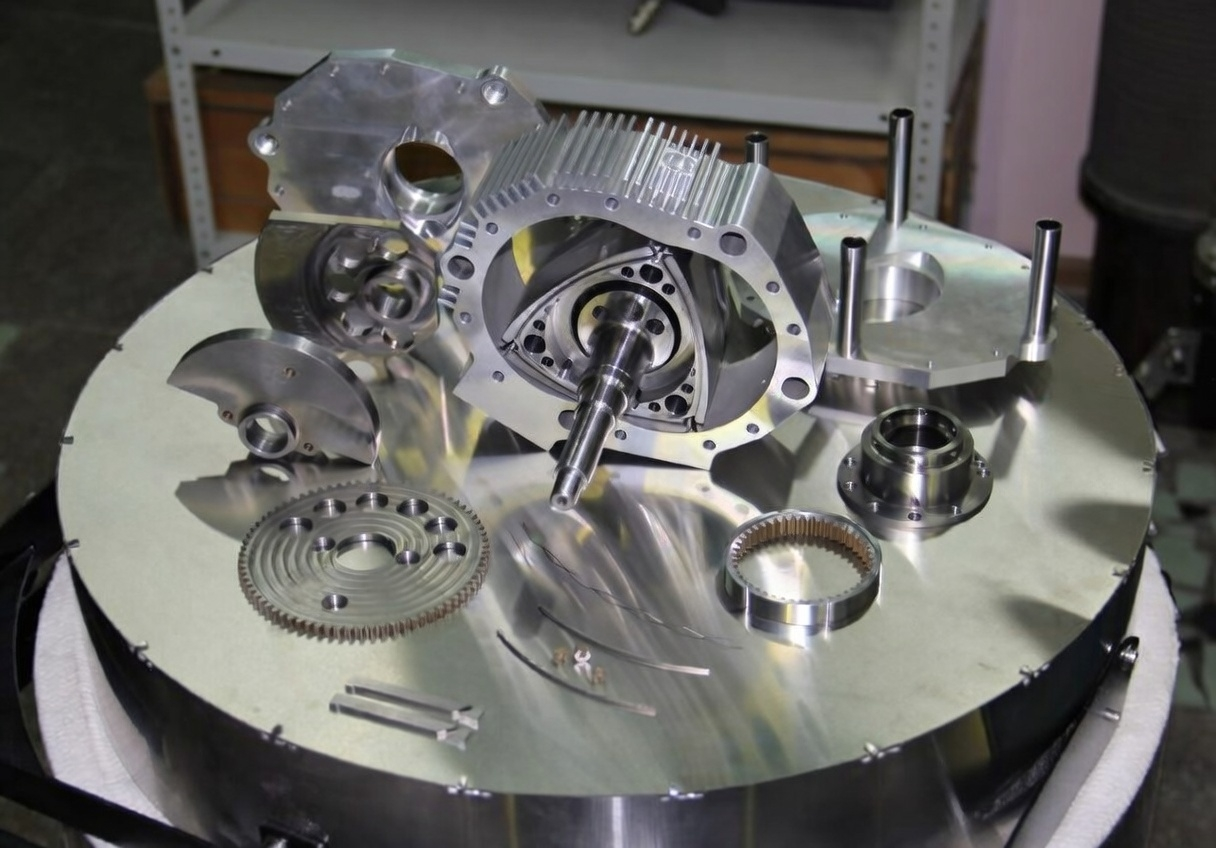
Within a year, the engineers managed to create a 300 cm3 rotary-piston engine developing 26 kW of power (35–36 hp). The unit is intended for use in unmanned and light manned aerial platforms weighing up to 300 kg. The first prototype was assembled and started at the end of 2025, demonstrating stable operation and compliance with the stated specifications.
The new development is intended to eliminate the acute shortage of 20–30 kW engines on the Russian market, where such solutions had previously been either unavailable or import-dependent.
Among the engine's key advantages are compact dimensions, low weight, high specific power, minimal vibration levels, and the ability to operate on standard automotive gasoline, which significantly simplifies logistics and maintenance in field conditions.
Read more materials on the topic:
- A second EP2DM electric train has been launched on the Finland direction of the Oktyabrskaya Railway
- Made of glass and aluminum: a new coating to increase engine efficiency and reduce fuel consumption was developed at YuUrGU
- Will Russia create a competitor to Boeing and Airbus?
Never miss our newsAdd this site to your preferred sources to see us more oftenAdd on Google















Comments (11)