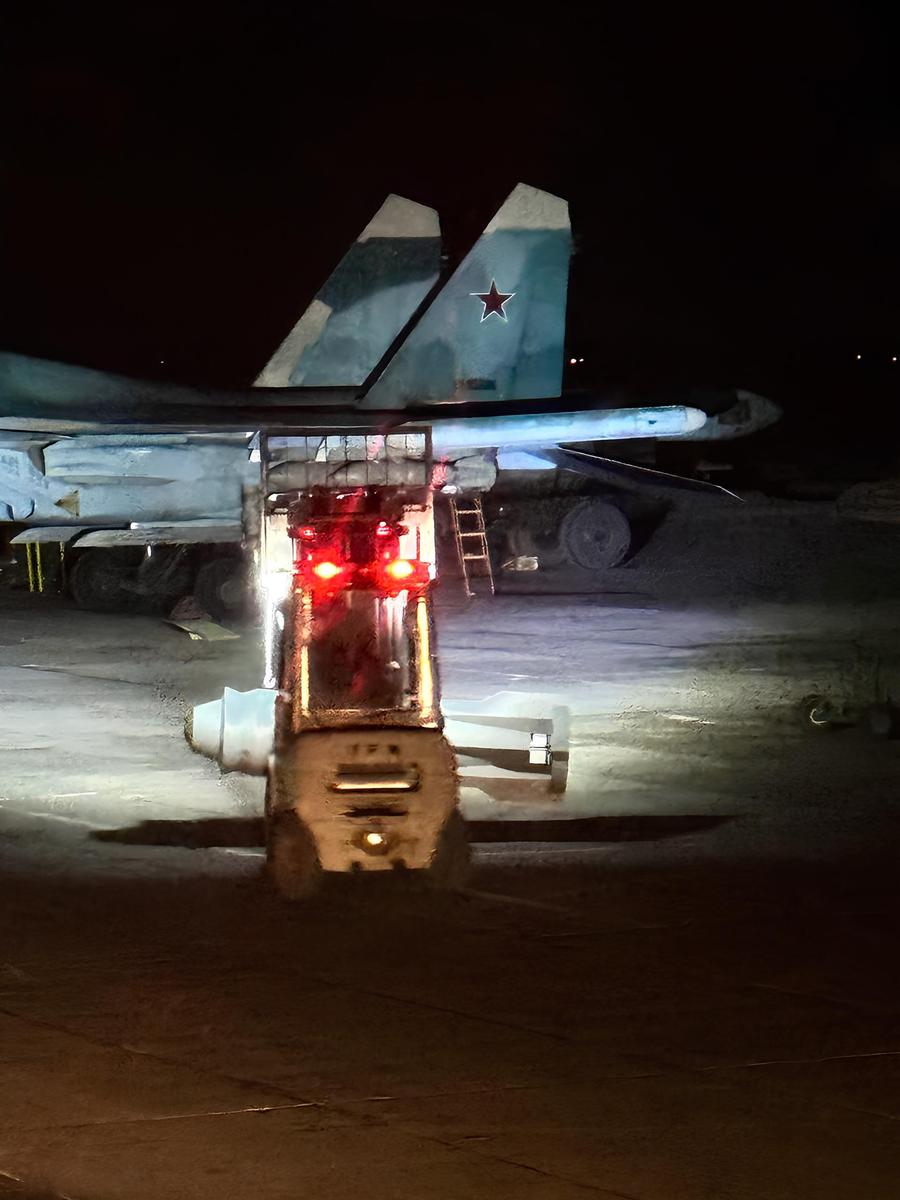
Photos of the Russian heavy aerial bomb FAB-1500 have appeared online before being suspended on a Su-34 fighter-bomber. A loader with ammunition on the forks drove directly to the aircraft.
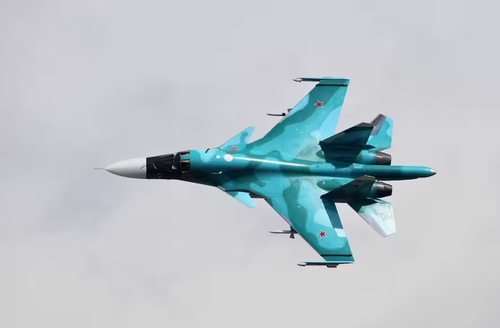
It should be noted that FAB-500s had previously been suspended from the pylons of the Su-34. So, apparently, the mighty one-and-a-half-ton bomb was intended for another aircraft in the series.
In addition, the FAB-1500 on the loader turned out to be in its original form, without a universal planning and correction module (UMPC). Presumably, the bomb was being transported for final equipment and adjustment.
As a reminder, the Su-34 is one of the main carriers of all types of aerial bombs in the Russian Aerospace Forces (VKS).
The range of the FAB-1500 M54 with UMPC has increased significantly compared to the radius of smaller caliber bombs equipped with planning modules.
The declared accuracy of the modified product is 5 meters. At the same time, when a bomb filled with 700 kg of explosives explodes, a crater with a diameter of 15 m is formed. The zone of complete destruction is 2 km.
Currently, each Su-34 can carry two such bombs. In the future, their number will be increased to three.
Earlier, www1.ru reported that Russia has created a new engine for the Orlan reconnaissance UAVs.
Read more materials on the topic:
- Rostec handed over a new batch of Su-34s to the Aerospace Forces - delivery without announcement
Never miss our newsAdd this site to your preferred sources to see us more oftenAdd on Google

















