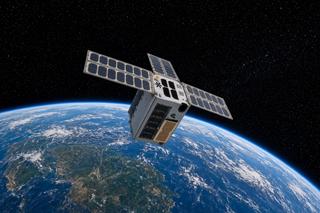
Baikonur is actively preparing for the launch of the Soyuz MS-28 manned spacecraft, which is scheduled to deliver the crew of the 74th long-term expedition to the International Space Station by the end of November.
Previously, the spacecraft successfully passed tests in an anechoic chamber at Baikonur, as well as a leak test of the systems and the entire spacecraft in a vacuum chamber.
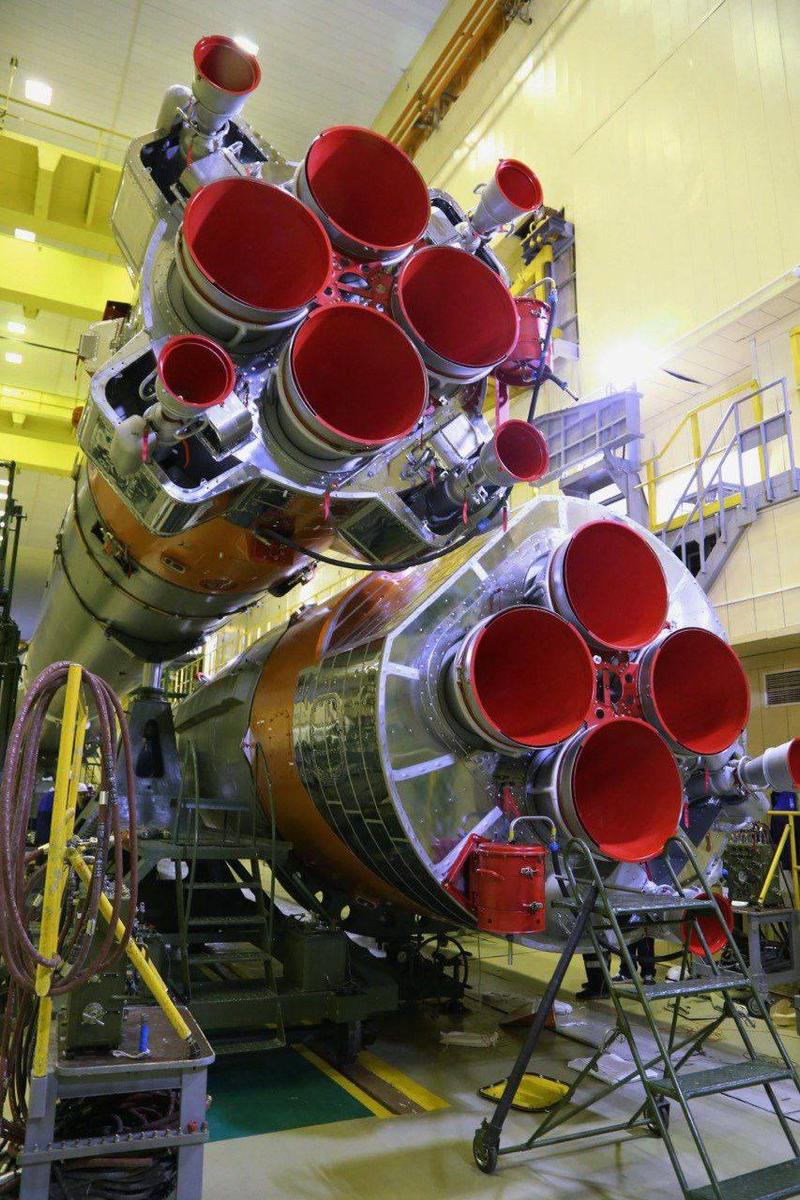
Currently, the "package" of the Soyuz-2.1a rocket, prepared for the manned mission, has been assembled.
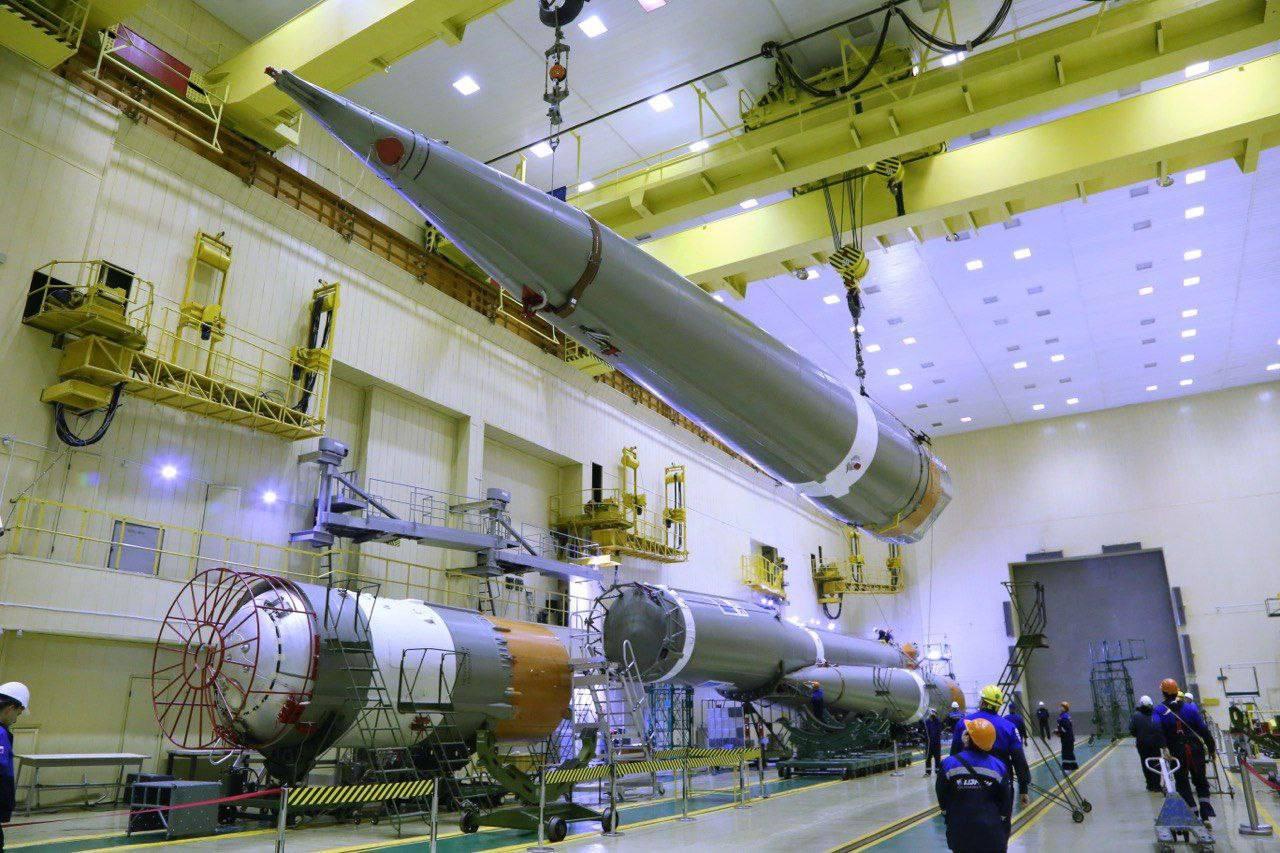
The "package" consists of central and lateral boosters. The central booster, which is the second stage, is placed on the slipway, and four lateral boosters, which are the first stage, are attached to it in turn. After assembling the package, it is docked with the third stage and the payload fairing, which contains the payload and the upper stage.
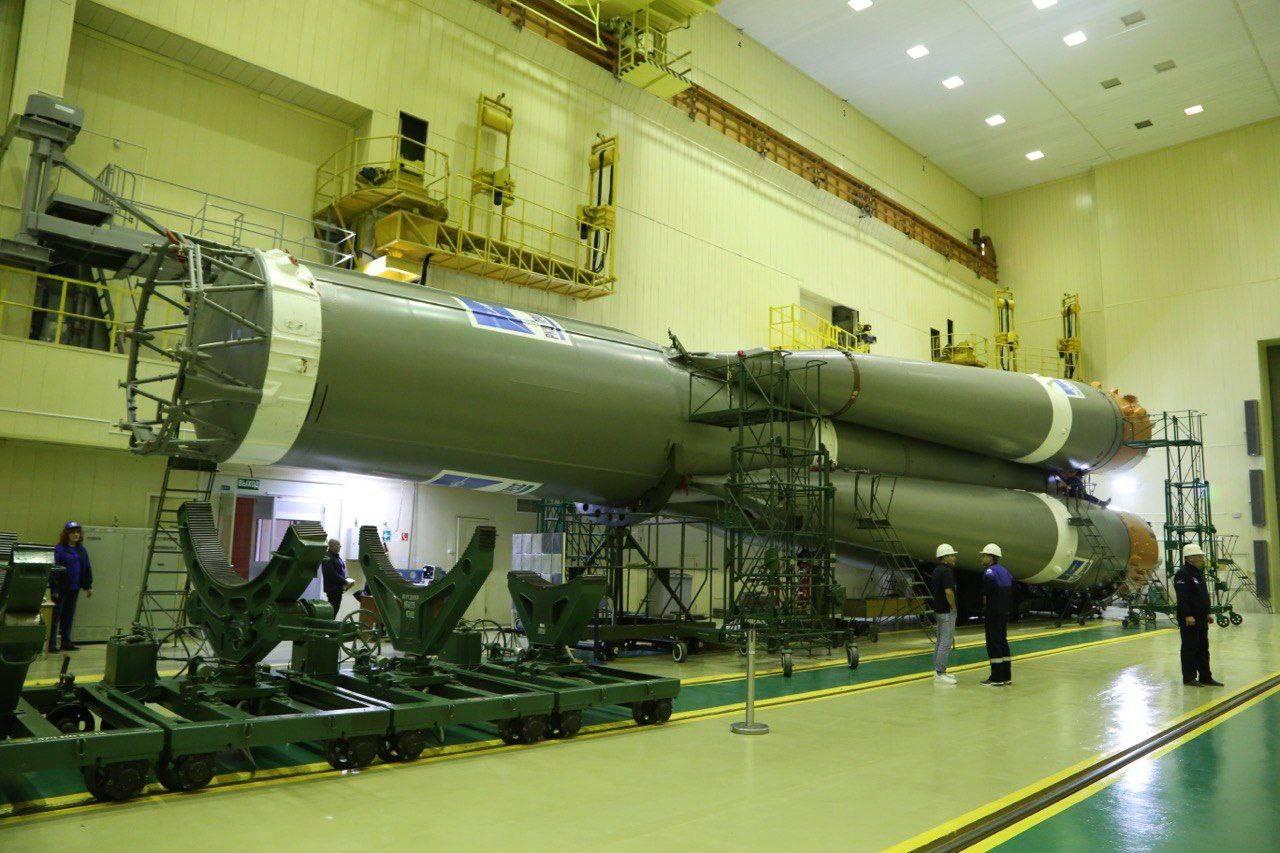
After mechanical assembly, autonomous and comprehensive tests are still ahead.
Read more materials on the topic:
- Roscosmos showed fire tests of the first stage of the Soyuz-5 rocket: video
- The Soyuz-2.1b rocket with the Mozhaets-6 training satellite was successfully launched from the Plesetsk cosmodrome
- Space success: Russia will build 600 RD-107A engines for the Soyuz family of rockets in 7 years
Never miss our newsAdd this site to your preferred sources to see us more oftenAdd on Google