Yandex has unveiled the new generation of its proprietary R 4.0 delivery robot and announced its successor, the R 5.0 model. The premiere took place at the Yandex Physical AI Conf in Moscow. In the coming months, the robots will be deployed on routes in St. Petersburg and Kazan.
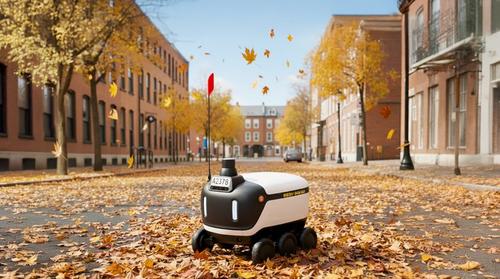
The R 4.0 rover features an updated design, more powerful computing units, and a new lidar instead of the previous radars. Ground clearance has been increased by 3 centimeters, the body is more durable, and the cooling and heating system allows it to operate in any weather.
The developers have unified the batteries with those used in Yandex electric scooters, which has simplified production and reduced costs.
Production has already been launched, and the company claims it can produce "hundreds" of robots per month. One operator now manages twelve devices at once, whereas at the beginning of the project, one person was assigned to one rover. The cost of delivery using robots has decreased fivefold in two years and is now comparable to the cost of courier delivery.
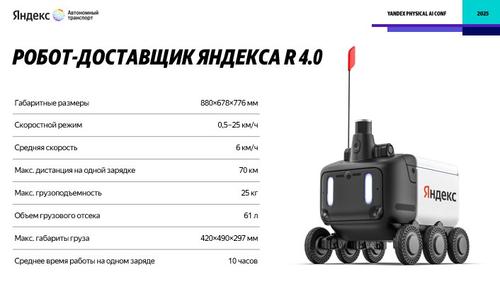
The R 4.0 rover can carry up to 25 kilograms of cargo with a compartment volume of 61 liters and a maximum distance of 70 kilometers on a single charge. The average speed is 6 km/h, and the autonomous operating time reaches 10 hours.
The next version, R 5.0, will be more spacious and autonomous, with an increased range and an improved navigation system. Yandex promises to reveal the exact specifications closer to the launch.
Read more on this topic:
- Delivery robots will appear on the streets of 37 regions of Russia
- Yandex is going to expand the production of delivery robots
- Delivery robots will have their speed limited on the streets
Never miss our newsAdd this site to your preferred sources to see us more oftenAdd on Google

















