Researchers at the St. Petersburg Electrotechnical University "LETI" have created a mathematical model that allows automatic prediction of the effectiveness of hearing aids. This development will help improve the quality of life for patients.
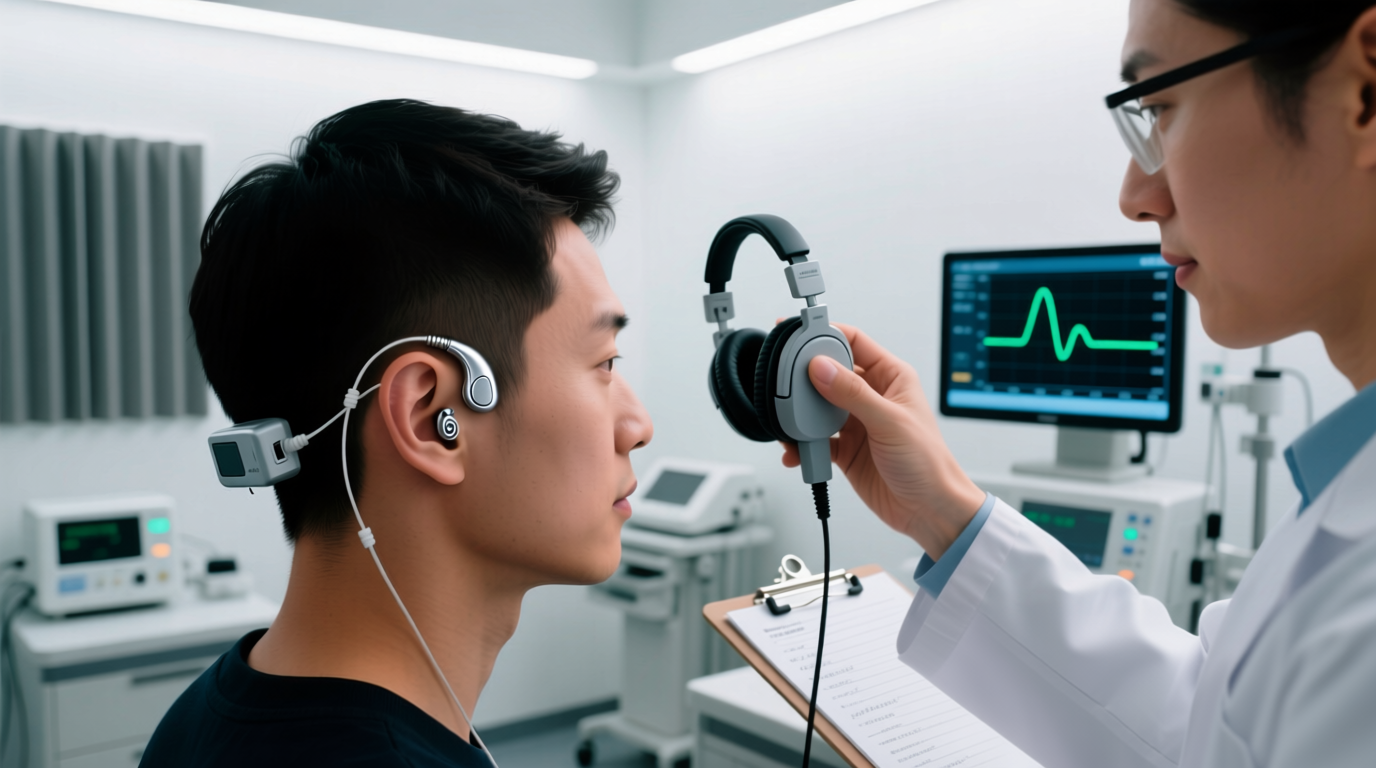
Our team is the first to quantitatively assess the compensation of speech perception deficit in patients, using the new Speech Perception Deficit Compensation Index. This indicator is based on the analysis of the difference between the actual results of speech tests and their predictions, derived from individual physiological thresholds of pure tone audibility using a special mathematical model.
It is worth noting that even patients with similar hearing problems may differ significantly in their ability to perceive speech due to individual cognitive characteristics. Traditional clinical methods do not sufficiently take these differences into account, which complicates the selection of hearing aids.
The study involved 513 people aged 19 to 93 years, including 403 hearing aid users. All participants underwent a full set of examinations: tonal audiometry, otoscopy, impedanceometry, and speech tests in various conditions to assess auditory processing. The uniqueness of the method lies in the use of a Bayesian network to predict the results of speech tests based only on audiometric data. This allows calculating compensation indices that reflect the effectiveness of central auditory and cognitive processes.
We believe that the developed approach could be a real breakthrough in the diagnosis of hearing loss and speech perception disorders.
The study involved scientists from "LETI," St. Petersburg State University, and the First St. Petersburg State Medical University named after Academician I. P. Pavlov.
Read more materials:
- Domestic bone vibrators for hearing aids appeared in Russia
- A device for assessing hearing was developed in the Novosibirsk region
- An application for assessing the sensory characteristics of people was developed at UrFU
Never miss our newsAdd this site to your preferred sources to see us more oftenAdd on Google