The Russian military has received the first 1,500 "Tor" multi-rotor drones. The delivery included drones with artificial intelligence (AI) and fiber optic models.
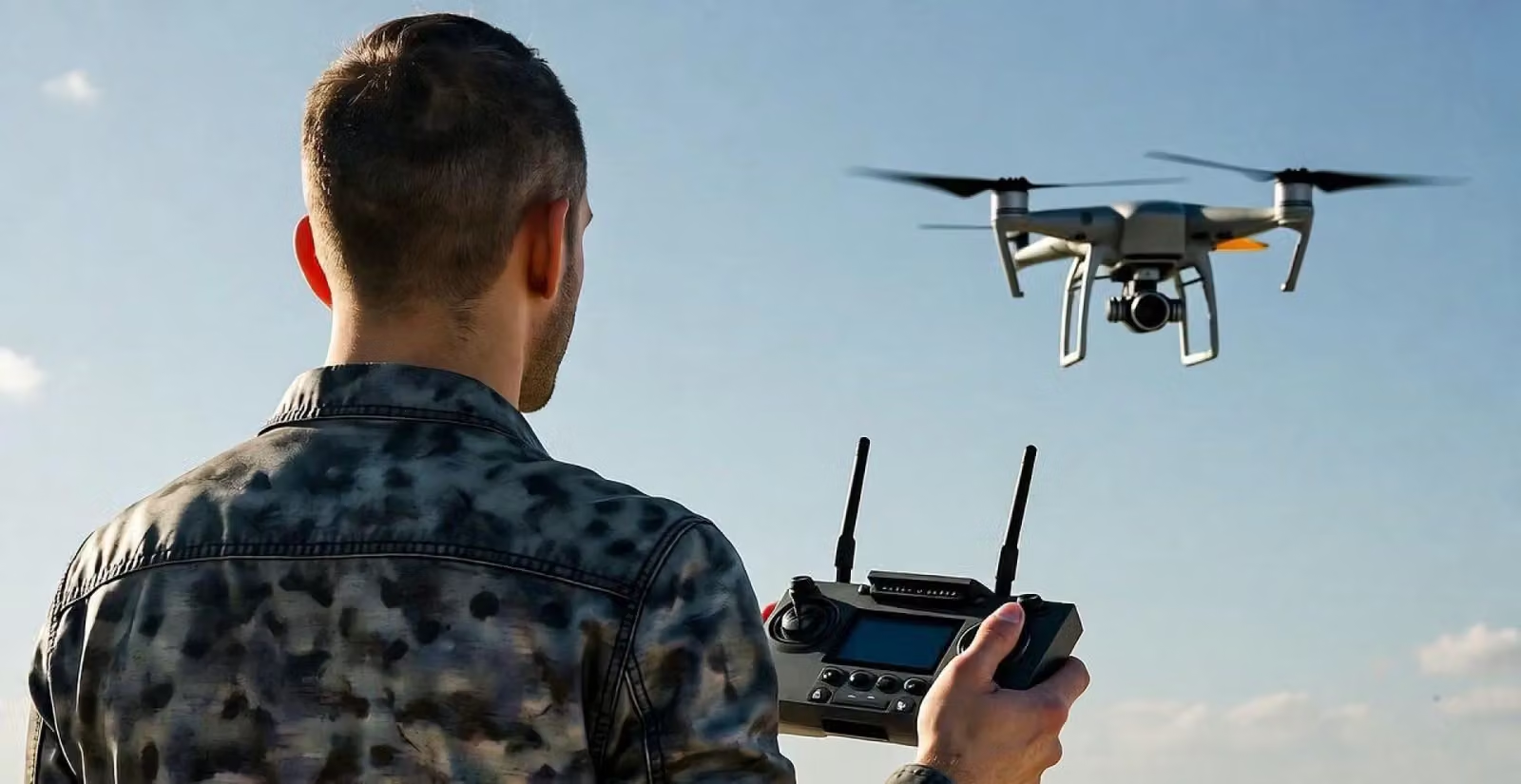
Image source: Grok
The built-in AI module allows the drone to bypass electronic warfare systems, take off autonomously, receive a task, and perform it without operator intervention.
Various control schemes are possible: the drone can be completely autonomous, or AI can guide it to the target when the operator initially sets a point (on the target). The operator chooses the mode. About fifteen hundred "Tor" drones of various modifications have been transferred to the military free of charge.
The "Tor" drone has been modernized dozens of times. The line of these UAVs includes models from 10 to 15 inches. Modifications include fiber optics and artificial intelligence modules.
Earlierwww1.ru reported that the "Zanoza" cable-laying drone wasdeveloped for the Russian army.
Read more materials on the topic:
- "Geran-2" drones are being equipped with a fragmentation-high-explosive warhead that detonates in the air
- Russian developers have increased the flight range of the fiber optic FPV drone "Knyaz Vandal Novgorodsky"
- "Kinzhal Strike": a new interceptor drone with a speed of 300 km/h has been developed in Russia
Never miss our newsAdd this site to your preferred sources to see us more oftenAdd on Google

















