The latest tactical drone control system called "Orbita" has been handed over to the Russian military on the front lines. This was announced by the head of the Center for Unmanned Systems and Technologies (CUST), Andrey Bezrukov.
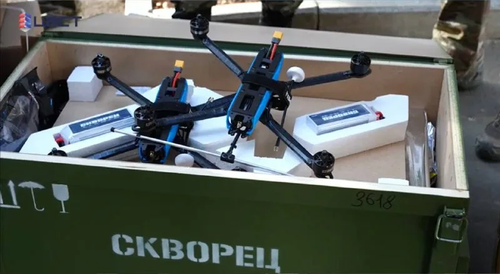
According to officials, the latest remote developments will forever change the landscape in the combat zone.
On the front line, a designated soldier with a backpack of drones will simply periodically run out of cover, put the drone on the ground, press a button on it, and run back.
This means that drone control points can be anywhere. It is possible that sooner or later drones will start launching directly from Moscow.
The unmanned complex is planned to include FPV drones "Skvorets", the ultra-long-range control system "Orbita", as well as advanced radio relay developments. According to the creators, "Orbita" uses artificial intelligence and neural network algorithms to identify, track, and destroy targets. Representatives of the CUST state that the time required to train an operator will be reduced "from four weeks to a couple of hours."
Earlier, www1 reported thatthe new "Orbita" complex will allow Russia to control kamikaze drones from anywhere in the world.
Read more on the topic:
Sobyanin: Four new stations of the Troitskaya metro line may open on City Day
A new DP2D train was tested on a difficult section near St. Petersburg
"Oreshnik" and its shadow: Russia hinted at the development of a new, more powerful weapon
Never miss our newsAdd this site to your preferred sources to see us more oftenAdd on Google