Russia has outlined a large-scale program for lunar exploration: it is planned to launch seven automatic interplanetary stations by 2036. This was announced by Lev Zeleny, scientific director of the Space Research Institute of the Russian Academy of Sciences.
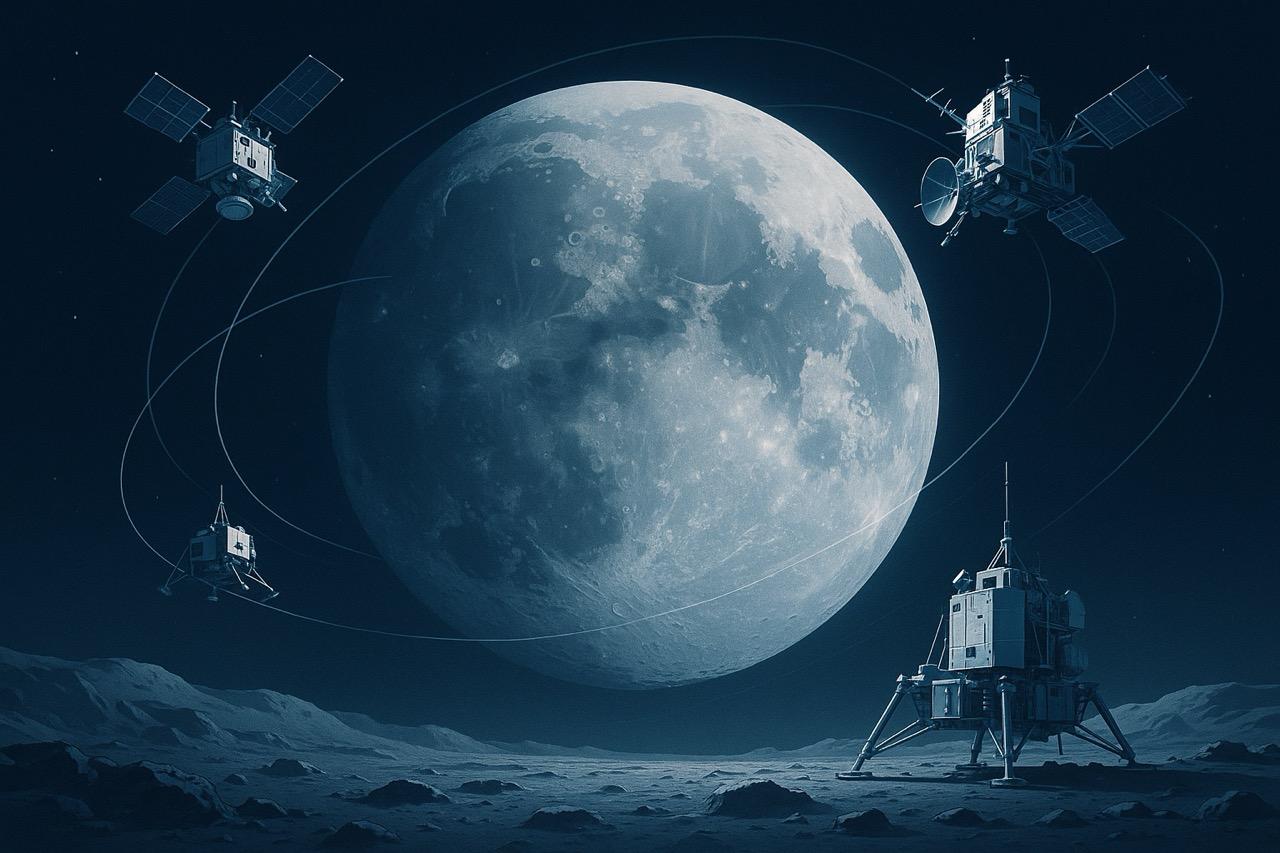
According to him, this is about the federal project "Space Science", which is part of the national project "Development of Space Activities of the Russian Federation". The program includes astrophysical research and a series of automatic expeditions to the Moon. At the same time, manned missions are not planned in Russia until 2036.
The nearest launch is the Luna-26 orbital mission, scheduled for 2028. The station will explore the exosphere of the Earth's satellite, conduct topographic surveys and study the features of its gravitational field. The next ones will be Luna-27A and Luna-27B, one of which will go to the South Pole, and the other to the North Pole of the Moon. According to the scientist, the choice of priority direction is still being discussed. The more ambitious Luna-28 mission will be associated with the delivery of lunar soil samples to Earth.
The national project also involves the launch of more than a thousand communication and remote sensing satellites. The total budget until 2036 will be about 4.4 trillion rubles, of which 1.7 trillion will be allocated in the next six years.
The launch of seven lunar missions and hundreds of satellites will become the foundation for future manned projects.
Read also on the topic:
Nihao, Moon!: Chinese mission uses Russian developments to study the Moon
Space in the long box: Russian missions to the Moon and Venus have been postponed
Never miss our newsAdd this site to your preferred sources to see us more oftenAdd on Google

















