On Saturday, September 13, 2025, in the morning, a Soyuz-2.1b carrier rocket was successfully launched from the Plesetsk Cosmodrome in the Arkhangelsk Region. A spacecraft in the interests of the Russian Ministry of Defense and the Mozhayets-6 training and research satellite were put into orbit. This was reported by the military department.
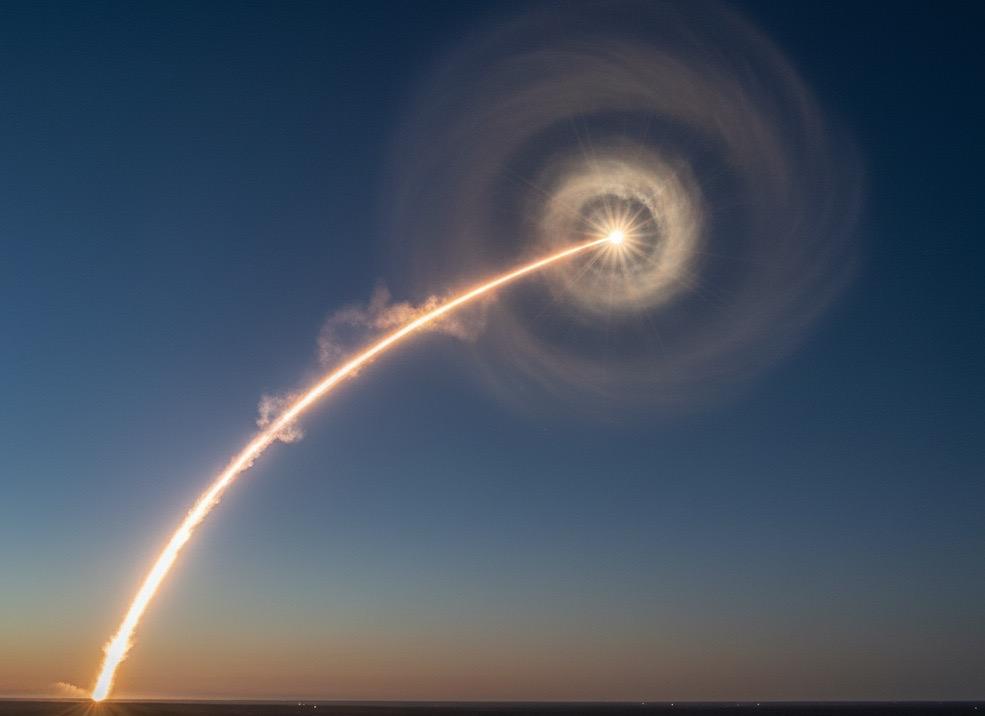
According to the Ministry of Defense, Mozhayets-6 was created by a student of the A.F. Mozhaisky Military Space Academy. The device is designed to test astronavigation algorithms - a technology that allows determining the position of a spacecraft in space using stars. Such satellites play an important role in training future specialists and improving navigation systems.
The rocket was launched on September 13 at 5:10 AM Moscow time. Presumably, the Glonass-K navigation satellite was also sent into orbit. There is no official confirmation of this information, as the launch is carried out in the interests of the Ministry of Defense. With an orbital inclination of 65 degrees, the rocket's trajectory passed in an eastern direction.
Residents of St. Petersburg could notice the flight over the eastern horizon, and Muscovites could see it low over the northeastern part of the sky. In the north of the European part of Russia, observers expected the appearance of the so-called "space jellyfish" - a characteristic luminous cloud that occurs when sunlight is reflected in the exhaust gases of the rocket. However, the brightness of the sky in the morning hours could reduce the visibility of the phenomenon.
Read materials on the topic:
"Everything is in force": Soyuz-5 rocket to be launched in December 2025
Space-scale plans: Roscosmos to launch 17 CubeSat satellites in 2025
Production of the Mozhayets-6 satellite completed: will become part of the Russian orbital group
Never miss our newsAdd this site to your preferred sources to see us more oftenAdd on Google

















