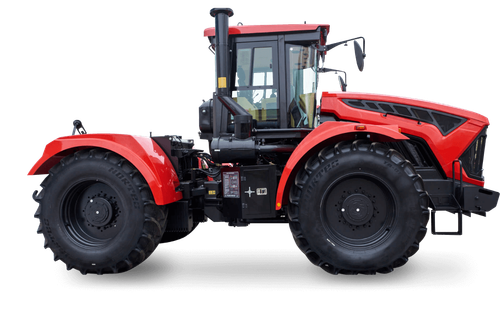
Petersburg Tractor Plant (part of the Kirovsky Zavod Group) in 2025 supplied 13 Kirovets tractors to Belarus for 188 million rubles, according to the head of the city committee for industrial policy, innovation and trade, Alexander Sitov.
According to him, the dynamics have increased significantly compared to previous years. For example, in 2022, 39 units of equipment were delivered for 177 million rubles, and in 2023 — 65 units for a total amount of 432 million rubles.
In the first quarter of 2025, 13 units were exported for 188 million rubles.
The share of Belarusian components in the Kirovets tractor, depending on the specific model, can be up to 20% of the cost price. A glass cabin, tires and other components are supplied to the country from Belarus. In total, there are approximately 40 parts, from the cardan shaft and air conditioner to small parts.
Read related materials:
MTZ is developing new models of forestry equipment Belarus ML-131M and Belarus MLPT-344M
Modernized tractor BELARUS 1222.3 brought to the exhibition "Under the sign of quality" in Moscow
MTZ specialists are assembling the first BELARUS-5022 tractor with a capacity of 500 "horsepower"
Never miss our newsAdd this site to your preferred sources to see us more oftenAdd on Google

















