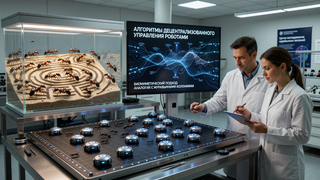
The first robot control system using the power of thought has been developed in Russia. This was reported at the National Center for Physics and Mathematics (NCPM).

This innovative neuromorphic technology uses memristors (a passive electrical element in microelectronics that can change its resistance depending on the electric charge that has passed through it) to control the movements of robotic systems.
Neural signals can be processed on miniature mobile computers and transmitted to the control system using wireless communication. The new electronic component base will reduce energy consumption, and therefore reduce the weight and size of the device.
The system allows the operator to control the movements of the robot using motor imagery.
First, he learns to imagine various actions, while brain signals are recorded and analyzed. The recorded brain signals are sent for analysis to the neurocontrol system - a block with a memristor chip, which can be located either on the operator or on the robot or prosthesis itself.
Brain signals are read using a classic EEG helmet and transmitted via Wi-Fi to a board with a memristor chip. On this chip, commands are processed and transmitted to the robot. During the control process, the operator can adjust their commands.
This development can significantly improve the functionality of medical prostheses and expand the possibilities of using robotics in various fields.
Earlier,www1.ru reported that a new and unique robot control system using thoughts wasdeveloped in Nizhny Novgorod.
Read materials on the topic:
Thought-powered truck control tested in Russia
Geoskan Pioneer Mini drone learned to be controlled without a joystick, by the power of thought
The average Russian turned out to be smarter than AI
Never miss our newsAdd this site to your preferred sources to see us more oftenAdd on Google