Russian scientists plan to raise ancient ice over 1.2 million years old from the depths of Antarctica. It will help in studying climate changes on the continent, according to Alexander Makarov, Director of the Arctic and Antarctic Research Institute.
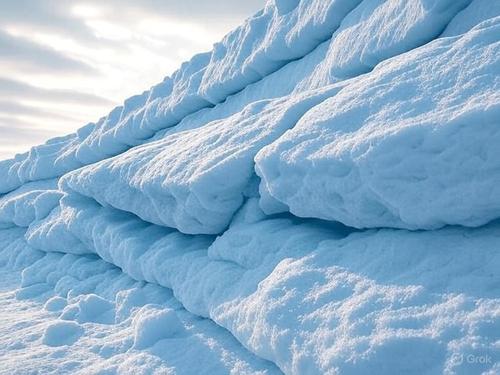
In February 2024, Russian researchers already extracted unique samples of ancient ice with mineral inclusions.
We are now thinking about work within the program for extracting ancient ice near the Vostok station at the "Dome B" watershed. I think there may be ice even a little older there. This find and what we do there will provide unique data about Central Antarctica, about how the climate has developed there over the past 1-1.5 million years.
The cores were raised from a depth of about 3600 meters. The largest inclusion was found at a depth of about 3540 meters. Its dimensions are 6 cm in the elongated section and 3 cm in the transverse section, and the color varies from dark green to light green.
The study of these ice samples will allow scientists to better understand how the climate has changed over millions of years, which is important for predicting future changes in the Earth's climate system.
Earlier www1.ru reported that how Russian scientists from AARI refuted the disappearance of Arctic ice by 2030.
Read materials on the topic:
Will explore the depths of the World Ocean: how the EIS "Almaz" of project 22010 is being built
Russia is creating a system for studying permafrost associated with ice conditions
A new virus has been discovered in the Arctic
Never miss our newsAdd this site to your preferred sources to see us more oftenAdd on Google

















