The domestic all-terrain vehicle "Arktika", developed by KAMAZ engineers, covered 3,300 km through the difficult-to-reach regions of Yakutia and Chukotka.
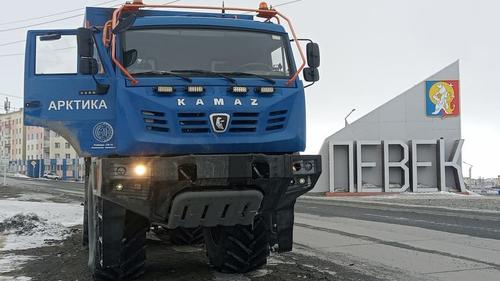
The expedition started in Yakutsk and finished in Pevek in a record 7 days instead of the planned 15. Route participants note that the vehicle demonstrated stability at temperatures below -50°C and on difficult sections, including ice crossings with unstable cover.
The key test was crossing the Kolyma River, where the ice thickness varied, creating a risk of failure. However, the special chassis design and load distribution allowed the vehicle to overcome the dangerous zone without damage. The crew, working in 18-hour shifts, confirmed the possibility of long-term operation of the "Arktika" in autonomous conditions.
The all-terrain vehicle is equipped with all-wheel drive, reinforced suspension and ultra-low pressure tires, providing traction on loose snow and ice. The power plant is adapted to work in extreme cold, and the sealed body protects the crew from hypothermia.
The successful run confirms the readiness of Russian technologies for the development of Arctic territories, where traditional equipment is ineffective.
Read more on the topic:
Conqueror of the Arctic: KAMAZ tested the K-6345 all-terrain vehicle
Has no analogues in the world: TREKOL showed the ARCTIC all-terrain vehicle at the Army-2024 forum
Production of Arktika all-terrain buses will be established at the Ural plant at the end of 2025
Never miss our newsAdd this site to your preferred sources to see us more oftenAdd on Google

















