A group of MIPT scientists has developed and manufactured a quantum processor circuit consisting of 40 superconducting quantum bits (qubits).
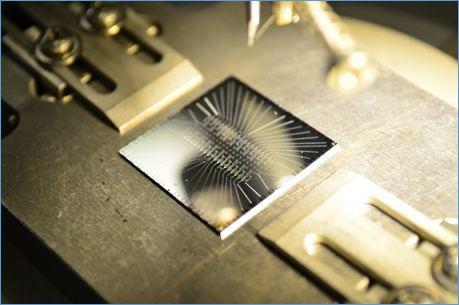
The quantum processor has passed preliminary tests, and further tests will be conducted at cryogenic temperatures to determine key parameters and qubit coherence times. The successful fabrication of a 40-qubit circuit is an important step in the development of domestic quantum technologies.
The microcircuit created at MIPT is manufactured at the MIPT Collective Use Center using a unique topology registered with Rospatent. The technology for manufacturing quantum devices is the result of many years of research and includes many technological processes that require constant debugging and improvement. As the number of qubits increases, the requirements for technology and process quality also increase.
The MIPT development team has ten years of experience in the field of superconducting quantum technologies, which allows them to perform the entire range of work - from calculations and design to manufacturing and measurements of superconducting quantum processors.
For the subsequent increase in the number of qubits in the processor, it will be necessary to update and expand the existing experimental and technological equipment. In the future, quantum processors will be used in quantum computers to solve problems that cannot be effectively solved using traditional computing machines, such as optimization problems, quantum chemistry, and quantum machine learning.
A qubit in a quantum device differs from a classical bit in that it can be in a state of superposition, which allows it to be in several states simultaneously and opens up new possibilities for creating innovative computing machines.
Read materials on the topic:
The first prototype of a 50-qubit quantum computer based on cold rubidium atoms has been launched in Russia
Reduced by 300 times: a new technology for manufacturing quantum systems on a crystal has appeared in Russia
Russian scientists have created a 50-qubit quantum computer with qudit technology
Never miss our newsAdd this site to your preferred sources to see us more oftenAdd on Google

















