Translated with AI from the Russian original.
The Shirshov Institute of Oceanology of the Russian Academy of Sciences plans toraise the sunken research vessel "Ashamba". This was reported by the press service of the university.
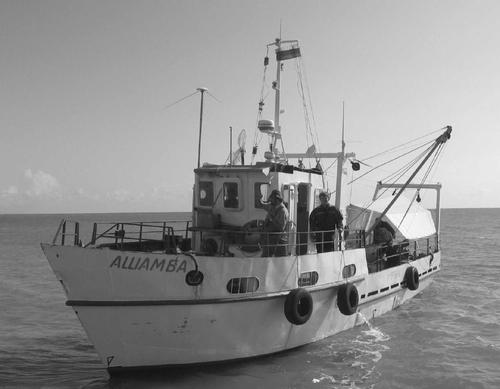
The vessel was in winter lay-up in the port of Novorossiysk after the completion of the 2024 expedition season. Meteorological conditions deteriorated significantly from February 17. The north-easterly wind increased to storm force, and the temperature dropped to -7°. NIS "Ashamba" sank as a result of icing on February 22 in the port of Novorossiysk.
There were no casualties or injuries. However, there were about 200 liters of diesel fuel on board. To prevent pollution of the water area, it is planned to install boom barriers.
It is worth noting that in November 2021, "Ashamba" was washed ashore in the Gelendzhik area due to a leak in the engine room.
The vessel was used for monitoring and polygon studies of the coastal shelf zone of the sea. It had restrictions on the navigation area in the 12-mile zone of territorial waters (the depth of the sea in this zone is up to 1700 m).
Read more on the topic:
TsMKB "Almaz" presented a project of a cargo hovercraft
Russia's largest civilian hovercraft "Khaska-10" has started testing
"Bobyor" hovercraft: military technologies have come to the "civilian" sector
Never miss our newsAdd this site to your preferred sources to see us more oftenAdd on Google

















