Translated with AI from the Russian original.
The research vessel (NIS) "Ashamba" of the BPM-74 project, belonging to the Southern Branch of the Shirshov Institute of Oceanology of the Russian Academy of Sciences, sank in the port of Novorossiysk. The preliminary cause of the incident was icing.
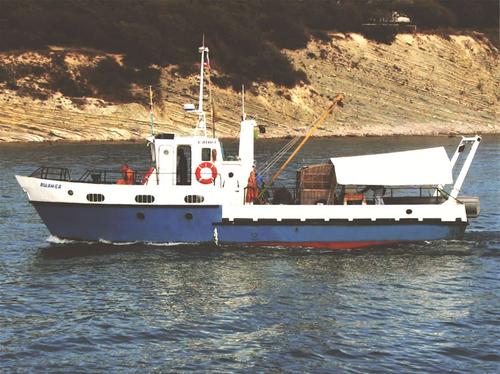
The vessel capsized and then sank "as a result of icing and loss of stability." This happened in the waters of the "7 feet" yacht club at berth No. 58 of the port of Novorossiysk on February 22.
By the time of the sinking, the crew had left the ship, and there were no casualties. There were 200 liters of diesel fuel on the "Ashamba."
NIS "Ashamba" was built at the Primorsko-Akhtarsk inter-collective farm shipyard of the Krasnodar Rybakkolkhozsoyuz in 1979. The vessel was used for monitoring multidisciplinary research on a standard section, polygon research of the coastal shelf zone of the sea, and removal and installation of measuring stations.
The vessel has restrictions on the navigation area in the 12-mile zone of territorial waters (sea depth in this zone is up to 1700 m). Vessel crew: crew - 2 people, scientific staff - up to 8 people.
Read materials on the topic:
TsMKB "Almaz" presented a project of a cargo vessel on an air cushion
The largest civilian vessel in Russia on an air cushion "Khaska-10" began testing
"Bobyor" on an air cushion: military technologies have come to the "civilian" sector
Never miss our newsAdd this site to your preferred sources to see us more oftenAdd on Google

















