A new method for determining the age of amber has been developed at the Immanuel Kant Baltic Federal University. This was reported in the press service of the university.
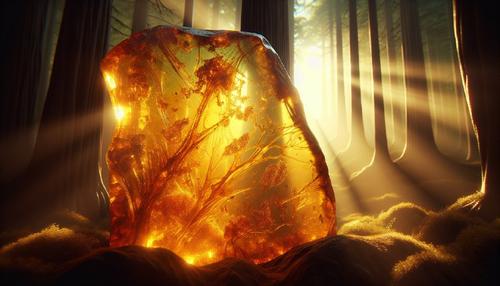
For the first time in the world, researchers have used a method based on giant Raman scattering spectroscopy for these purposes.
Using the latest optical sensors, researchers were able to assess the chemical composition of amber and classify its age. 57 samples of fossils from various countries (Russia, USA, Dominican Republic, Germany, Ukraine, New Zealand, Mexico and France) were analyzed. The samples ranged from the youngest to the ancient, dating back to the age of dinosaurs, which is about 200-220 million years old.
The proposed method has proven its effectiveness, and the first publications on the project have been obtained. Since radiocarbon analysis of such objects is only possible for the host rock of fossilized resins, further developments allow analyzing amber directly.
To classify the samples, scientists used machine learning algorithms. The research team plans to test the methodology on another 70 samples of amber from different periods. In the future, researchers intend to develop an appropriate classifier.
Earlierwww1.ru reported that scientists from Russia, the USA and Great Britainfound "relatives" of modern coral reefs in the Arctic.
Read materials on the topic:
Russia Denies NATO Accusations of Concealing Climate Data on the Arctic
Russia is creating a system for studying permafrost associated with the ice situation
Never miss our newsAdd this site to your preferred sources to see us more oftenAdd on Google