NUST MISIS plans to develop Russian roll-to-roll solar panels made of perovskites. Representatives of the university told Gazeta.Ru about this. Currently, silicon is often used in solar panels in global practice, but perovskite solar panels, due to the iodine content in their composition, absorb light more strongly than silicon, approximately 10 times more.
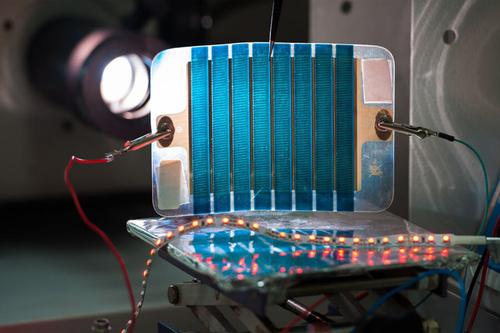
Scientists have been trying to find an alternative to silicon since the 80s of the last century. And only now can solar energy more or less compete in some areas with fuel and nuclear energy. The transition to a new technology, for example, to perovskites, with the same high efficiency, promises to significantly reduce the cost due to the use of cheap materials and a simplified printing cycle. The production of monocrystalline silicon and the printing of perovskite film are simply incomparable in terms of cost - the price of perovskite is 2.4 times lower compared to silicon.
If silicon batteries require ultra-pure silicon, then perovskite films can be printed using a simpler method, similar to the operation of an inkjet printer. After printing, perovskite films are layered on top of each other in several layers.
One film can generate the same amount of energy from sunlight as a 200-micron thick silicon plate. At the same time, perovskite is 400 times thinner, which will allow creating ultra-cheap flexible roll-to-roll solar batteries.
The timing of the appearance of the first samples of this product has not yet been announced. Development of Russian perovskite roll-to-roll solar batteries is underway, but so far"work in this direction is not a priority".
Earlier in 2024, scientists from the University of MISIS, together with colleagues from other countries, proposed an innovative method of ion-beam sputtering of electrodes onto perovskite solar batteries. It allows obtaining a translucent coating of indium-tin oxide with the desired properties without damaging other layers of the panel.
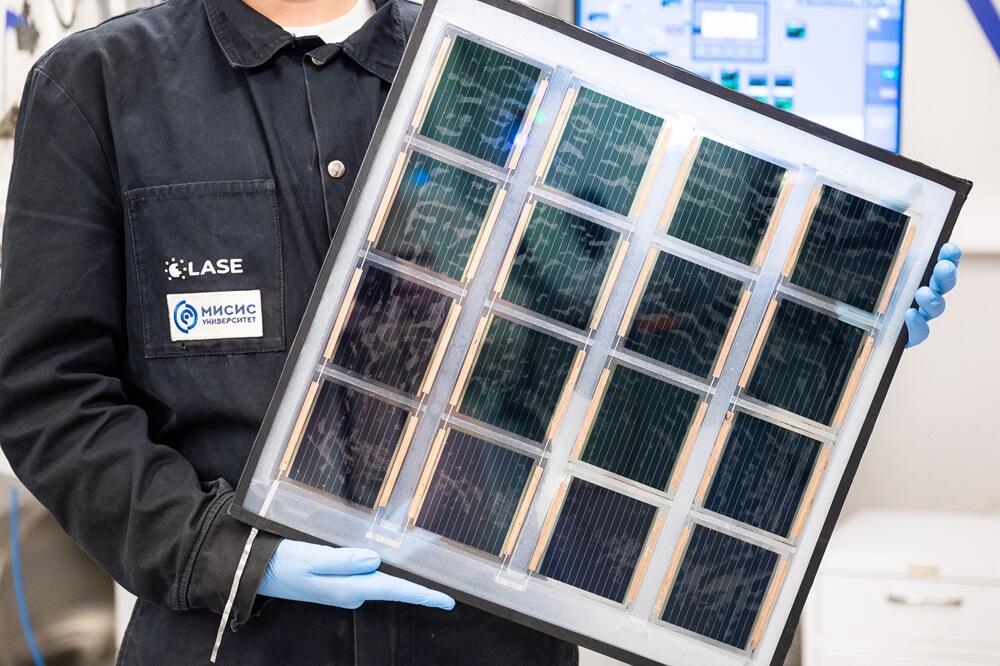
At the same time, the efficiency of solar cells has significantly increased: from 3.12% - a value characteristic of solar cells after traditional processing - to 12.65%. According to scientists, solar cells supplemented in this way can be effectively integrated into windows, facades and other structures in various ways.
Read materials on the topic:
New frost-resistant materials for Russian batteries are being tested in Siberia
Rosatom is creating new materials for space nuclear installations
Never miss our newsAdd this site to your preferred sources to see us more oftenAdd on Google

















