Scientists from the Ural Federal University (UrFU) have developed special radiation-resistant bricks. It is assumed that they will become an indispensable material for creating fences inside the premises of nuclear power plants during repairs and other works, including modernization. This was reported in the press service of the university.

The material is made of metal waste from metallurgical enterprises of the Urals with high shielding properties and Vietnamese red clay, resistant to high temperatures.
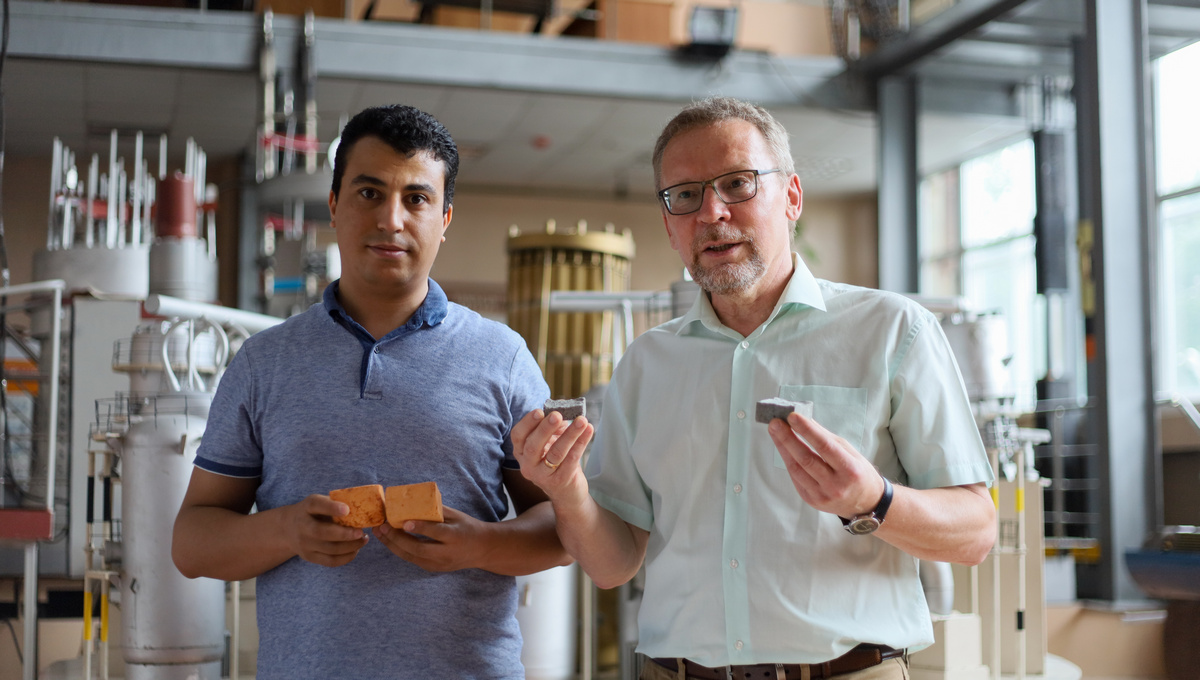
This composition will allow the use of bricks to protect people from radiation at nuclear power plants, as well as equipment operating in extreme temperatures.
Our bricks are designed to create quickly erected structures. A very real and frequent situation is that in some room at a nuclear power plant there are repairs in which there is equipment with highly radioactive substances. To protect people from radiation, you can build a wall around the source of radiation from the bricks we have developed. Unlike other materials, such as concrete blocks, our bricks are light, they can be carried manually, they are also perfect for creating fences of any configuration and any size, including in rooms with non-standard layouts.
According to scientists, their invention will help to easily and quickly erect barriers, as well as disassemble them, and reuse the bricks.
In addition, there is a practice of packaging similar protective blocks in polyethylene, which is easily decontaminated if necessary.
The cost of such bricks is also very low. The new material consists of 70% metal waste and 30% red Vietnamese clay. In the future, the clay is planned to be replaced with its Ural clay, and the use of metal waste from industrial enterprises of the Urals will give a new life to what was planned to be disposed of.
Currently, scientists are studying new substances to improve bricks. In the future, the composition may be supplemented with diatomite or halloysite to increase the shielding properties of the material.
Earlier www1.ru reported that Russian scientists came up with how to amplify terahertz radiation by 8.5 times.
Read materials on the topic:
Withstand radiation: Russia has developed new video systems for working at nuclear power plants
Rosatom sent key parts of the safety system and reactors for Chinese nuclear power plants
Universal solar batteries for the Arctic and space are being created in Russia
Never miss our newsAdd this site to your preferred sources to see us more oftenAdd on Google