Translated with AI from the Russian original.
The popular Telegram channel "Mash" wrote about the use of the Italmas suicide drone from Zala Aero by the Russian Armed Forces. Presented in September of this year on the Russia 1 TV channel, the product of engineers from the Izhevsk enterprise Aeroscan can fly more than 200 kilometers to its target.
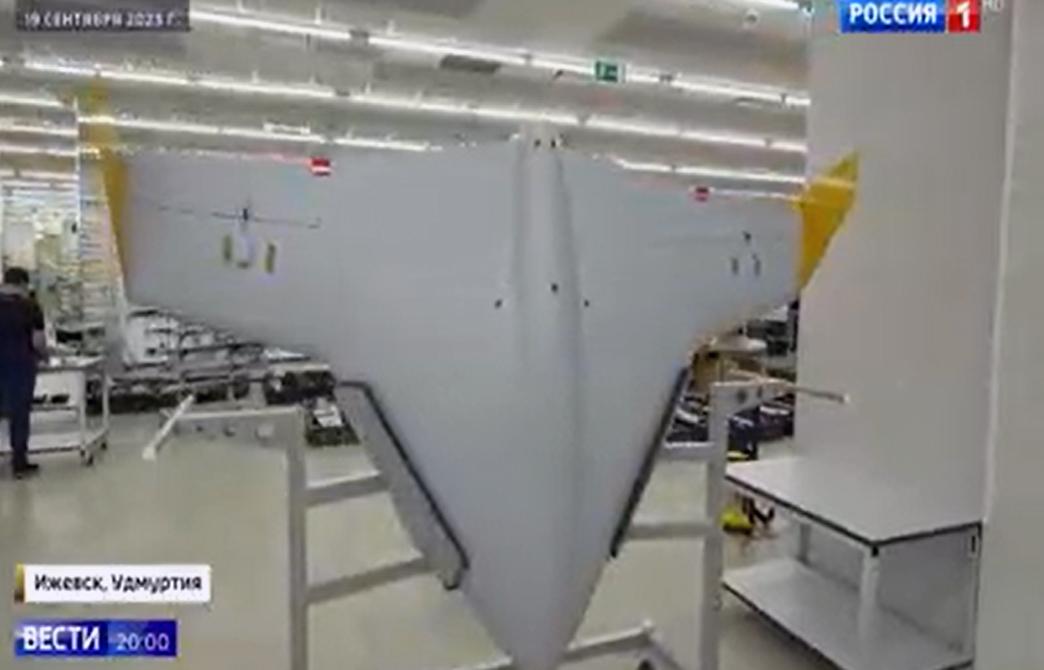
It runs on an internal combustion engine, and fuel is poured into the wing-fuel tanks. This allows the suicide drone to become the domestic champion in terms of flight range to the target.
But, in addition to "Italmas", Russia has other equally remarkable kamikaze UAVs, which "First Technical" has previously reported on.
The most invulnerable of them is the new Tubus suicide drone"Tubus". It is hardly vulnerable to small arms and invulnerable to electronic warfare equipment because it is not connected to satellites. This light drone develops a speed of up to 250-300 km/h and can hit targets in the form of artillery and armored vehicles at a distance of up to 30-40 km from the launch site.
The most versatile and secret is the Gastello suicide drone"Gastello", capable of operating both day and night. It was launched into mass production in August of this year. But a significant part of its technical characteristics never appeared in the public domain.
This suicide drone is named after the Hero of the Soviet Union, pilot Nikolai Gastello. At the very beginning of the Great Patriotic War, on June 26, 1941, Gastello's crew attacked the Wehrmacht forces over Belarusian land, but the plane was shot down. Then Gastello and three crew members decided not to evacuate. They went on a ram, and sent a burning bomber into a column of enemy equipment and fuel tankers.
The most maneuverable and rapidly changing is the Lancet suicide drone. It is named after a sharp, precise surgical instrument and has several generations.
This UAV flies at a speed of up to 300 km/h with different types of ammunition at a distance of up to 50 km from the launch site and conducts reconnaissance of potential targets. If necessary, it drops high-explosive fragmentation ammunition on them and can return to base. Or the drone dives at a specific target and explodes with it, hitting enemy manpower, light equipment and even tanks.
"Lancets" are able to dodge enemy attacks, return to base if necessary on the operator's command, or switch between several targets in their area of operation.
The family of these drones from ZALA Aero is part of the Kalashnikov concern and is constantlybeing improved. In addition to constant updates to all systems, the Lancets may soon have their ownreconnaissance and strike complex, similar to MLRS.
Never miss our newsAdd this site to your preferred sources to see us more oftenAdd on Google

















