Translated with AI from the Russian original.
The difference in tank sounds is often perceived as a sign of one machine's "progress" and another's "backwardness." While the M1A2 Abrams seems noticeably quieter, the T-90M "Proryv" is loud and heavy in motion, especially on hard surfaces.
But in reality, the reason for this difference is not in the level of technology, but in two different engineering schools and approaches to the design of the power plant and running gear. "Pervyy Tekhnicheskiy" explains why tanks sound so different in practice.
Whistle versus business bass
When a tank passes by, the first thing that forms an impression of its "quietness" is not the tracks, but the engine. The M1A2 Abrams has an AGT1500 gas turbine engine. It operates without the characteristic piston strokes and vibrations of a diesel engine, emitting a smooth, high-frequency whistle.
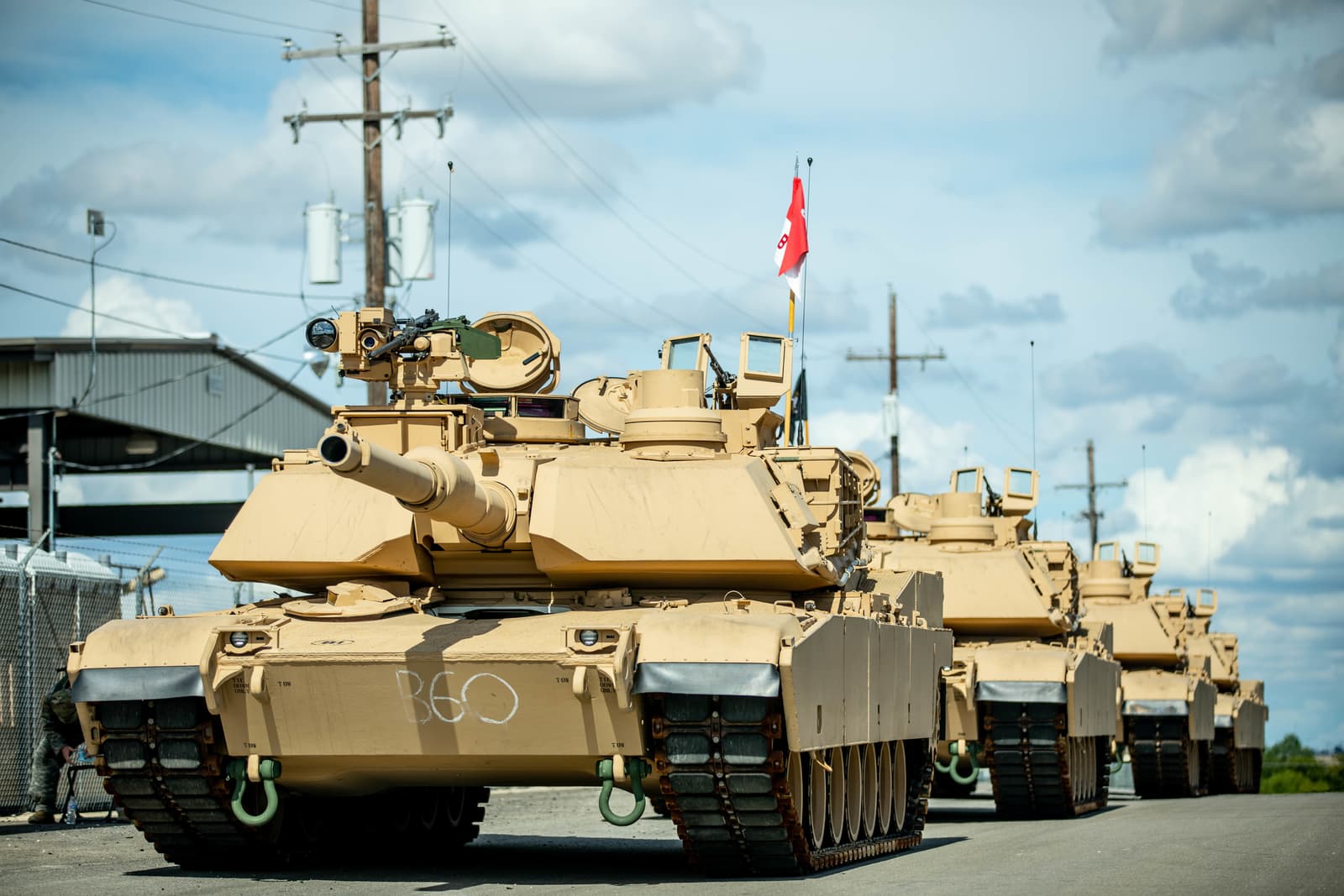
Such a sound propagates differently: it "sticks" less to the ground and dissipates faster in the air. Therefore, the Abrams seems less loud, especially at medium distances. It is for this reason that it is sometimes called "whispering death" — audible, but not as sharply and "heavily" as diesel equipment.
The T-90M is equipped with a V-92S2F diesel engine. This is a classic piston engine with pronounced low-frequency vibrations. Such a sound propagates better along the ground and is amplified by reflections from the terrain and objects, so the tank is perceived as much louder and acoustically "heavier."
Tracks — noise is important, but not the decisive factor
It is often believed that the Abrams is quieter only because of the rubber "shoes" on its tracks, but this is only part of the picture. Rubber pads indeed reduce the noise of contact with asphalt and dampen vibrations when driving on roads.
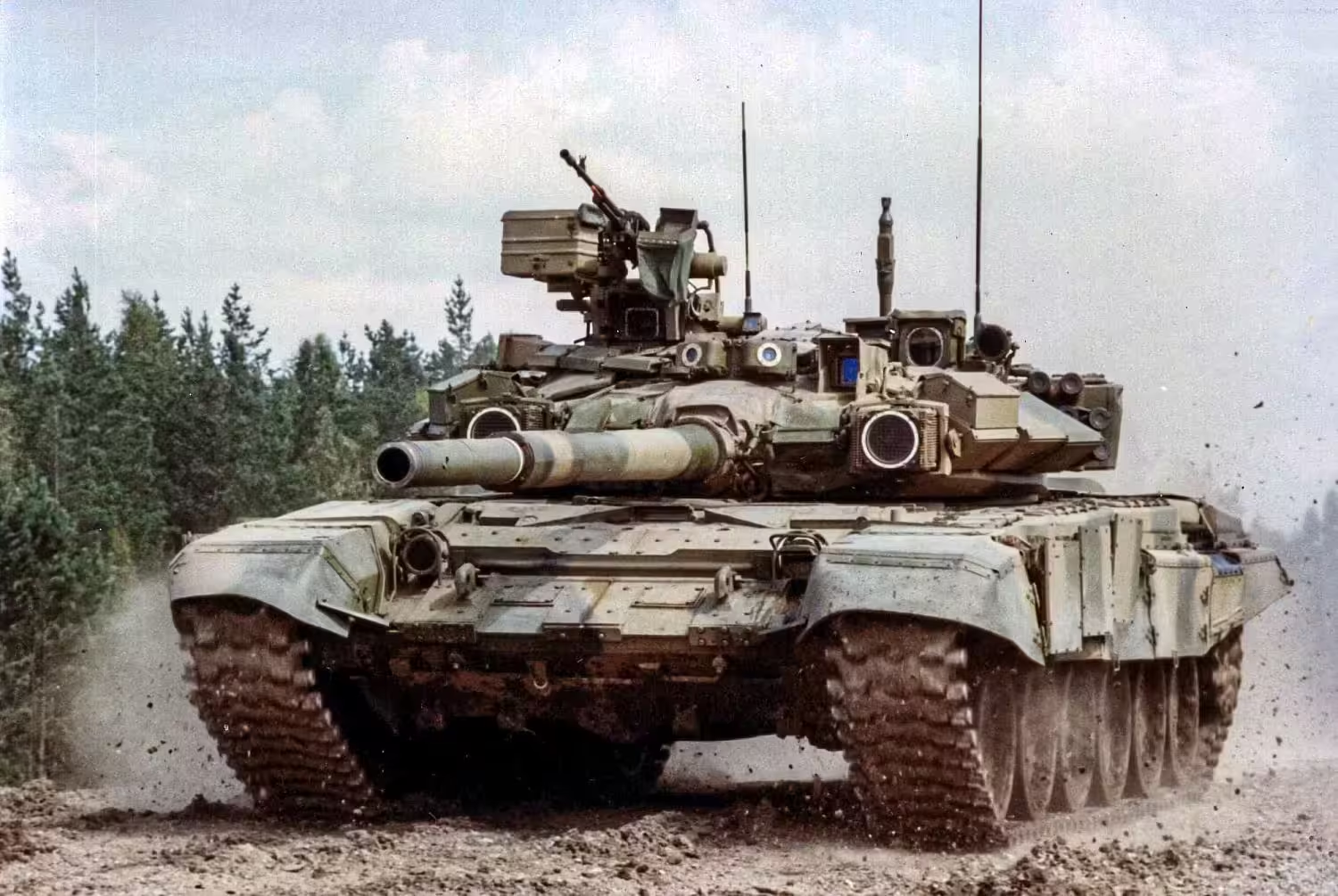
However, the T-90M is not all about "bare metal." Modern machines use modernized tracks with improved hinges and elements to reduce impact noise.
They are noticeably quieter than old Soviet tracks, although it is impossible to completely eliminate metallic contact with such a mass. As a result, both tanks have running gear noise, but it is not the main source of differences.
Why the difference feels so significant
The key effect is a sum of factors. The Abrams produces a high-frequency "airy" sound from its gas turbine, which is less transmitted through the ground. The T-90M generates a low-frequency diesel hum, which literally "spreads" across the surface and is amplified by the terrain.
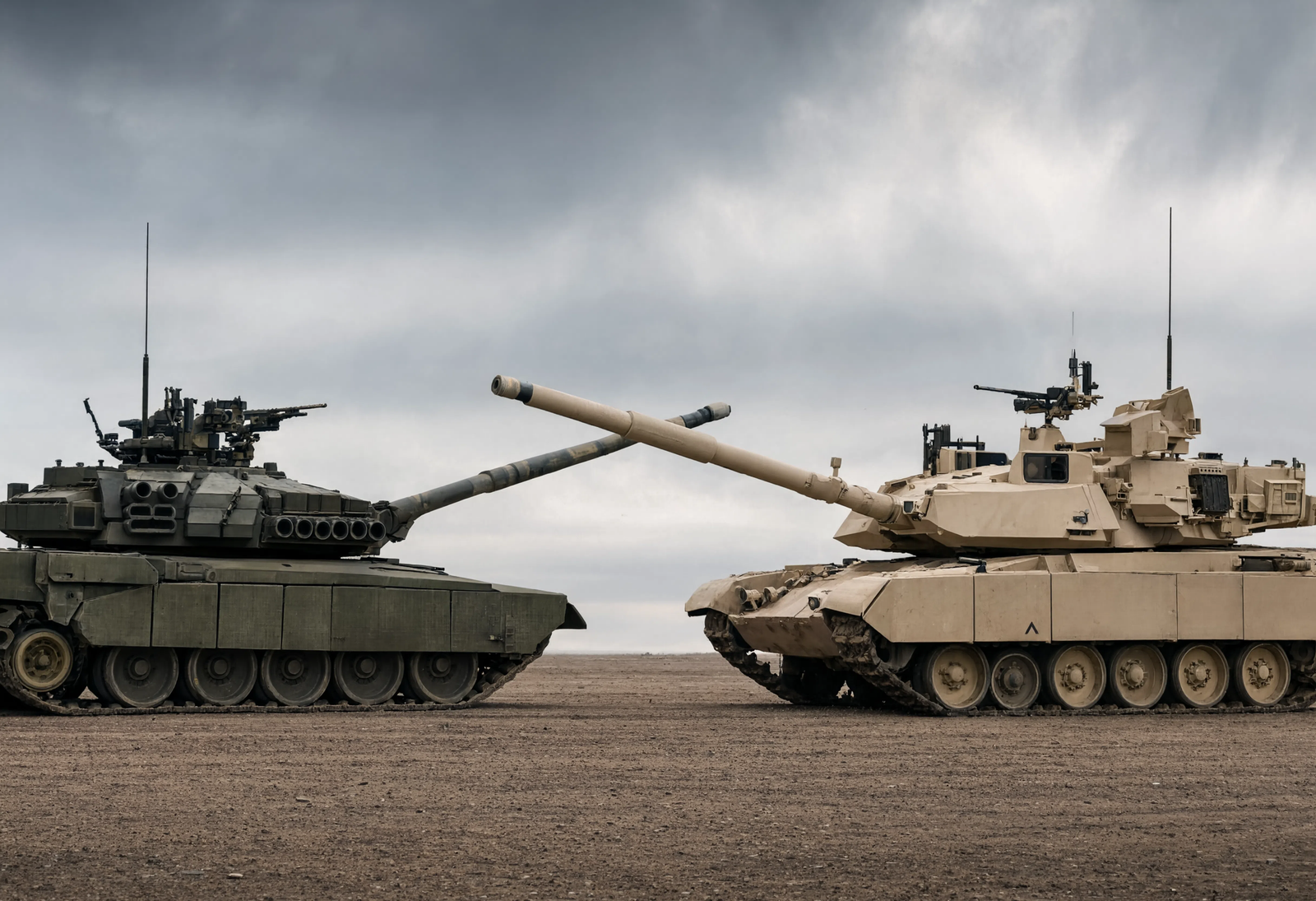
Therefore, in practice, the Abrams is perceived as a quieter tank, and the T-90M as louder and heavier, although the actual difference in noise level is not always as dramatic as it sounds.
Read more on the topic:
Never miss our newsAdd this site to your preferred sources to see us more oftenAdd on Google

















