Russian scientists from MISIS University, RUDN University, and RCTU have found a way to transfer graphene more accurately onto plates for flexible electronics and high-speed computing devices. According to the Ministry of Education and Science, the material's resistance after transfer was reduced by almost 18 times compared to the traditional method.
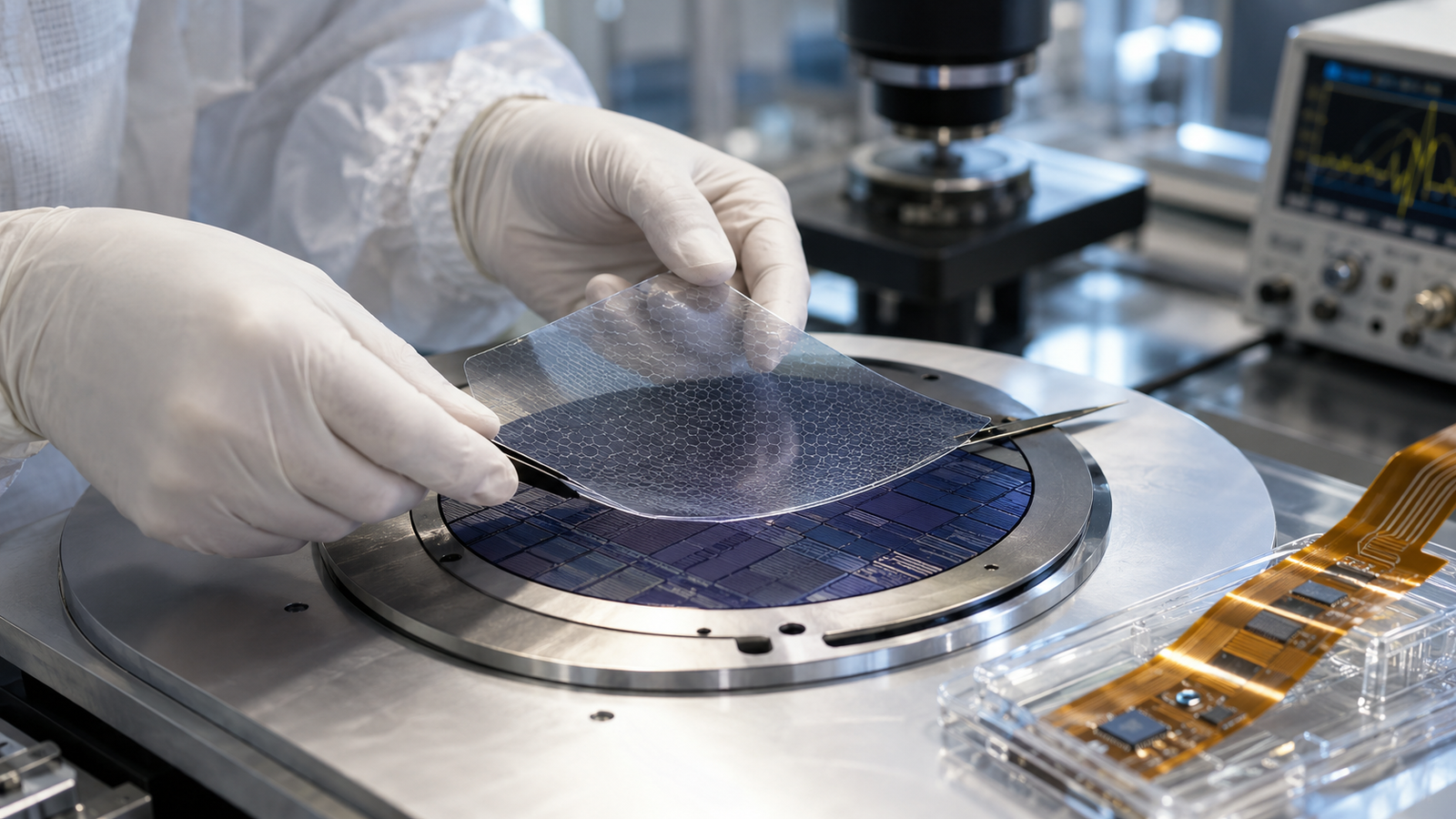
Graphene itself is almost ideal for electronics: it is ultra-thin, flexible, strong, and conducts electricity well. But there is a weak point – transfer. The material is first grown on a metal substrate and then transferred to another surface, such as a silicon wafer. At this stage, cracks, contamination, and defects appear.
Polymethyl methacrylate is usually used for transfer, but it may not completely dissolve and leave traces on the surface. The researchers proposed another polymer – polybutyl methacrylate. It interacts less strongly with graphene, damages it less, and helps preserve electrical conductivity.
Graphene transferred using polybutyl methacrylate polymer demonstrated excellent uniformity, fewer cracks and contaminants, and reduced resistance – one of the key parameters for microelectronics. In other words, the proposed approach allows graphene to be transferred with minimal loss of its useful properties.
Another advantage of the approach is that the new polymer is easier to synthesize in the laboratory due to the readily available butyl methacrylate. Details of the study are published in the journal Next Materials.
Read more on the topic:
Never miss our newsAdd this site to your preferred sources to see us more oftenAdd on Google