Researchers at Tambov State University named after G. R. Derzhavin discovered that graphene nanoribbons can both destroy bacteria and accelerate their growth – it all depends on the added surfactant.
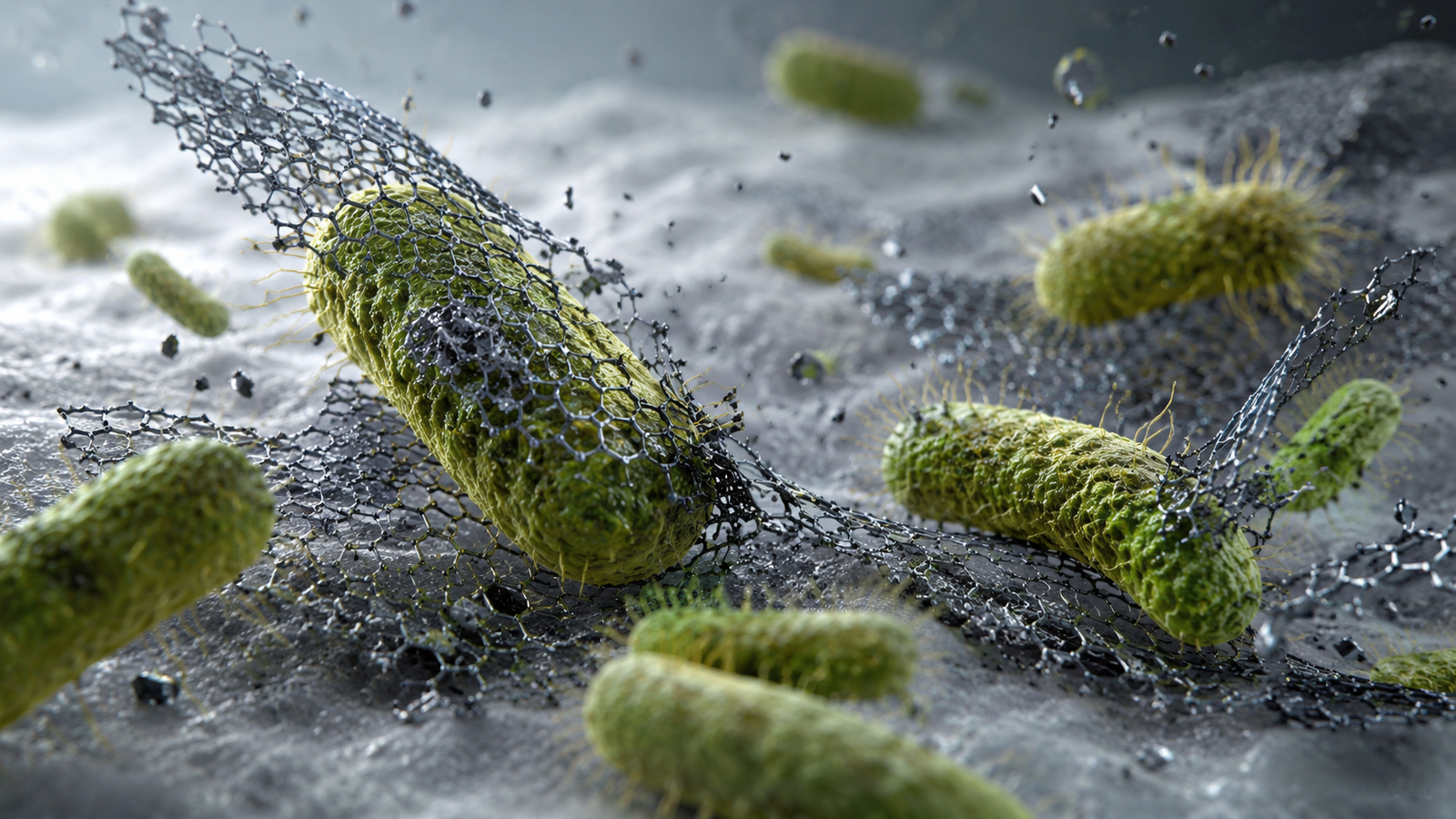
Graphene nanoribbons are ultra-thin strips of graphene, only one atom thick. The material is considered promising for medicine, but in water, such structures quickly clump together and lose their properties. To avoid this, scientists use special stabilizers – surfactants.
As the study showed, these substances determine the antibacterial effect of the material. Bacterial cells have a negative charge, so positively charged surfactants cause graphene nanoribbons to literally be attracted to microbes, adhere to their membrane, and destroy it.
During the experiments, researchers tested three types of stabilizers on four types of bacteria, including E. coli and staphylococcus. It turned out that when cationic surfactants were used, the effectiveness of nanoribbons against Gram-positive bacteria increased by approximately 10 times.
At the same time, neutral and negatively charged substances had a completely different effect: in some cases, bacteria not only survived but also began to multiply more actively.
According to the scientists, the discovery could help in creating antibacterial coatings for surgical instruments, catheters, and implants. Simultaneously, the study also revealed potential environmental risks: if such nanoparticles enter water or soil, they can affect the balance of microorganisms in the environment.
Read more on the topic:
- TSU Scientists Discover Previously Unknown Genus and Family of Bacteria in Western Siberia's Groundwater
- For mechanical engineering and medicine: TSU scientists have strengthened the protection of magnesium alloys by 40%
- Ceramics Capable of Killing 90% of Bacteria in Light Sintered by Scientists from SPbGTI and KSC RAS
Never miss our newsAdd this site to your preferred sources to see us more oftenAdd on Google