Translated with AI from the Russian original.
A new method for developing deposits has been announced in oil production, which significantly increases reservoir coverage and raises the oil recovery factor through paired placement of horizontal wells and precise displacement control. The development was presented by engineers from PAO "Tatneft" named after V.D. Shashin.
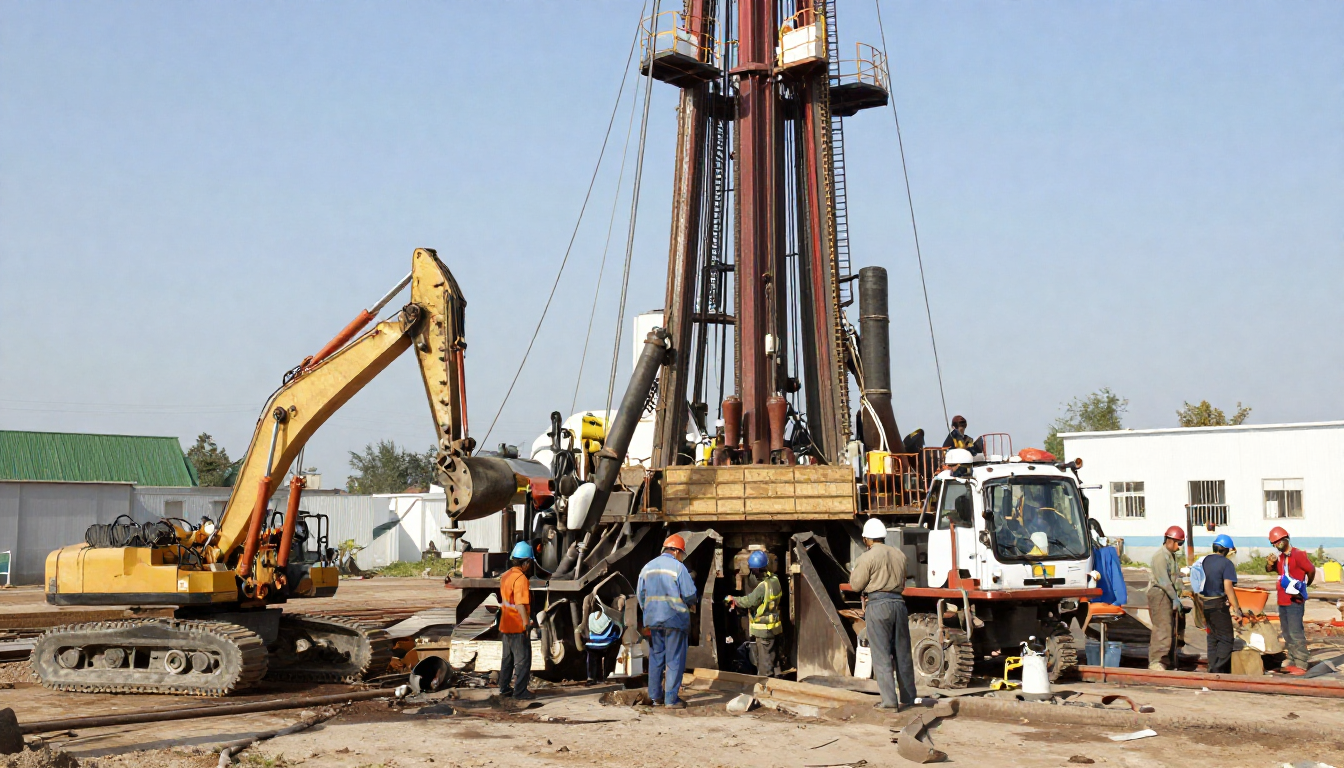
The essence of the solution is that first, a producing horizontal well is drilled in the lowest part of the productive reservoir, as close as possible to the bottom, but with a specified safe offset. Its trajectory passes through the elements of the field grid to ensure wide contact with the reservoir. After commissioning, the well is actively monitored for pressure, flow rate, and water cut, while simultaneously forming a controlled production system.
When reservoir pressure and inflow decrease, a second — injection horizontal well — is drilled in the upper part of the deposit, strictly parallel to the first. A vertical distance is maintained between them, excluding premature breakthrough of the injected agent. Displacing fluid is supplied to the injection well, and its perforation is specially oriented upwards and sideways to evenly "push" the oil down to the producing horizon.
A separate effect of the technology is achieved due to deep perforation of the producing well in all directions, which expands the drainage zone and involves several levels of oil-saturated reservoir at once. With high oil viscosity, a thickener composition for injection is additionally selected, which improves displacement and stabilizes the development process.
The engineering effect of the method lies in the practically vertical "coverage" of the deposit: one pair of wells works as a distributed pressure system, covering a reservoir up to several tens of meters thick and ensuring more complete extraction of reserves with fewer wells and simplified drilling logistics.
Read more on the topic:
Never miss our newsAdd this site to your preferred sources to see us more oftenAdd on Google

















