Translated with AI from the Russian original.
Researchers at RTU MIREA have developed new electrode materials for hydrogen-oxygen fuel cells, "Pervy Tekhnichesky" was informed by the university. Scientists found that porous nickel with platinum and nickel nanoparticles applied in a 3:1 ratio provides 65% more power than standard carbon materials.
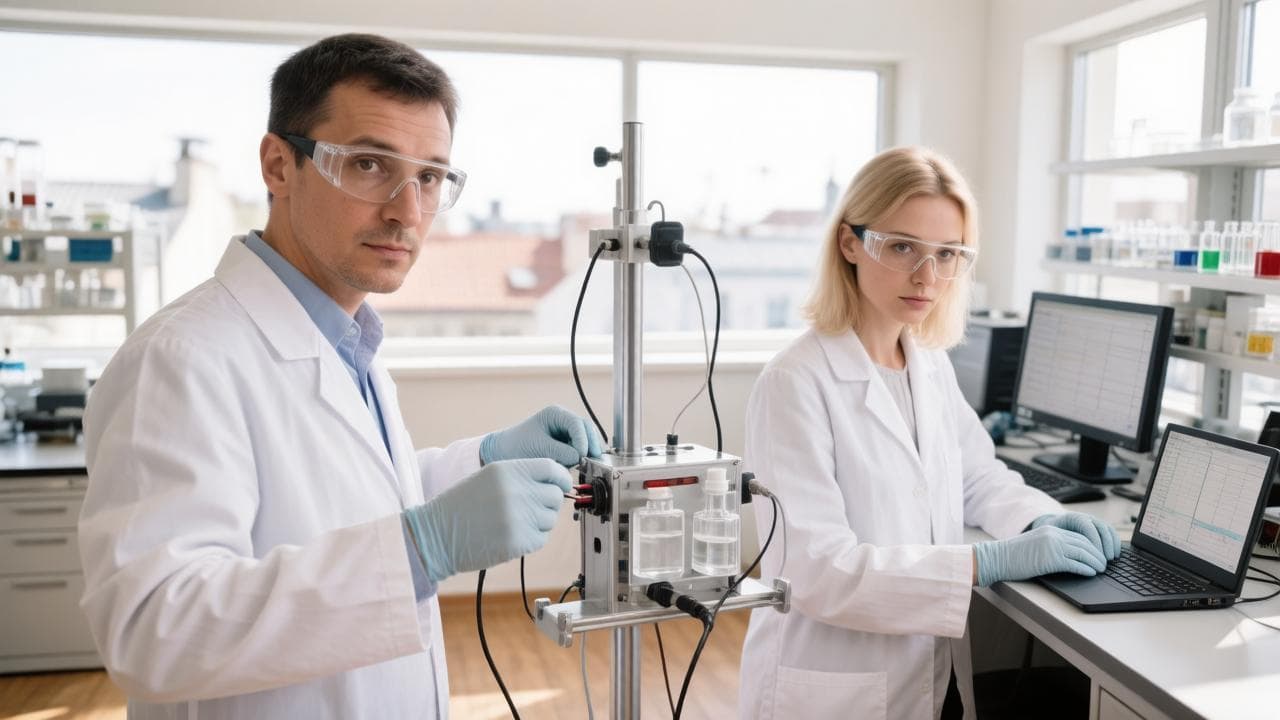
Hydrogen fuel cells convert the chemical energy of hydrogen and oxygen into electricity, releasing only pure water. The main problem with their widespread adoption is the high cost and low efficiency of electrodes. A team of scientists led by Marina Lebedeva from RTU MIREA proposed a solution: instead of pure platinum, use bimetallic nanoparticles of platinum and more affordable nickel, and porous nickel as the substrate instead of traditional carbon paper or fabric.
During tests of fuel cell prototypes, the sample with porous nickel and nanoparticles showed a specific power of 67.2 mW/cm². This is significantly higher than carbon analogs. The secret lies in the structure of porous nickel, which resembles a sponge with many channels and pores. Such a surface ensures uniform distribution of catalytic nanoparticles and unhindered access of hydrogen and oxygen to the reaction sites.
The authors emphasize that they did not just test powders in the laboratory, but assembled working prototypes of membrane-electrode assemblies – key components of a real fuel cell. The obtained current and power figures can serve as a direct guide for engineers designing new energy sources.
In addition, the research team modifies polymer membranes (the "heart" of the fuel cell) using platinum metal nanoparticles. Such modification increases the specific power of the cell and extends its service life. Scientists also for the first time proposed an effective method for evaluating the energy parameters of fuel cells using a special electronic load, simplifying the acquisition and analysis of experimental data.
The developments by Russian scientists can accelerate the emergence of hydrogen cars with a long range, provide energy to remote objects, and form the basis for autonomous power supply of modern electronics.
Read more on the topic:
Never miss our newsAdd this site to your preferred sources to see us more oftenAdd on Google

















