Translated with AI from the Russian original.
An unusual marine antenna, capable of literally "scanning" the seabed at great depths, has been created by employees of the "Hydroacoustic Systems and Complexes" division of the Advanced Engineering School together with the student design bureau "Akustika". It is designed for research, searching for objects, minerals, and geological exploration. The development was presented by specialists from Southern Federal University (SFedU).
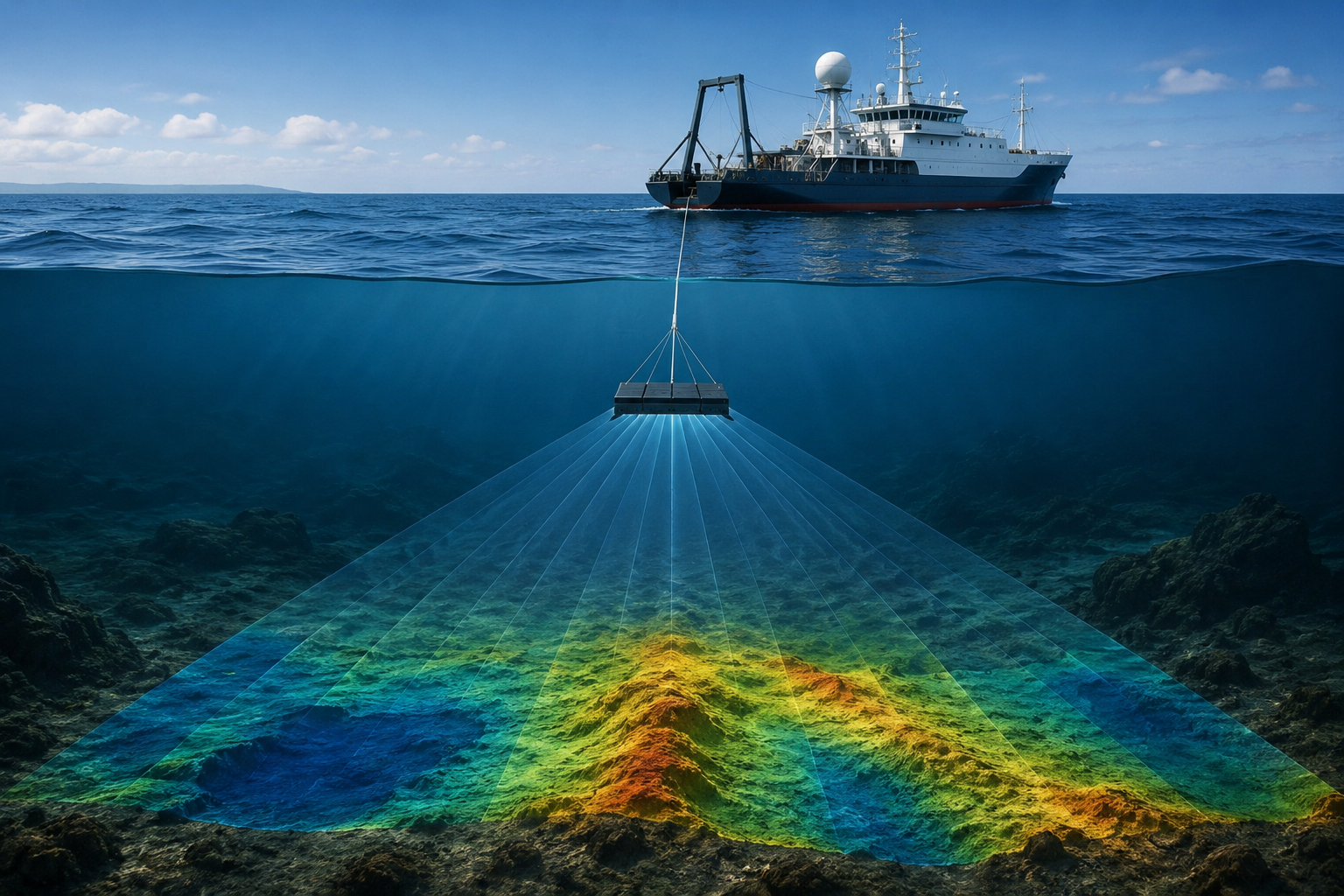
The device is planned to be installed on research vessels. The antenna will be able to operate at depths of up to 6 kilometers and "see" the bottom sediment to a depth of 200 meters – depending on the type of rock. The development is planned to be used, among other things, for analyzing the resources of the northern seas.
The antenna weighs about 400 kilograms. It was assembled at SFedU together with industrial partners. The Taganrog Priboy plant manufactured and supplied piezoelectric transducers, and the V. V. Tikhomirov Scientific Research Institute of Instrument Design, part of the Almaz-Antey Aerospace Defense Concern, coordinated and accepted the work.
There are currently no direct analogues to this seismic profiler in Russia. The antenna, approximately one meter by one meter in size, is installed directly into the bottom of the vessel – in a special tank, after which the ship is launched into the water.
Work is currently underway with several potential customers. In addition, research is being conducted jointly with PISH NovGU for the Russian Ministry of Transport as part of the national project "Effective Transport System".
In parallel, specialists are developing antenna systems for fishing sonars and creating their own piezoceramic elements for fish-finding antennas.
Read more on the topic:
Never miss our newsAdd this site to your preferred sources to see us more oftenAdd on Google

















