Translated with AI from the Russian original.
Scientists from the Institute of Cosmophysics of NRNU MEPhI have developed a working prototype of a gamma-ray telescope with unique time-sensitive protection. As TASS reported in the university's press service, the device is designed for space operation and addresses cutting-edge astrophysics problems – from studying gamma-ray bursts to searching for dark matter. The key advantage over the American "Fermi" telescope is its ability to clearly distinguish gamma-ray quanta from charged cosmic ray particles.
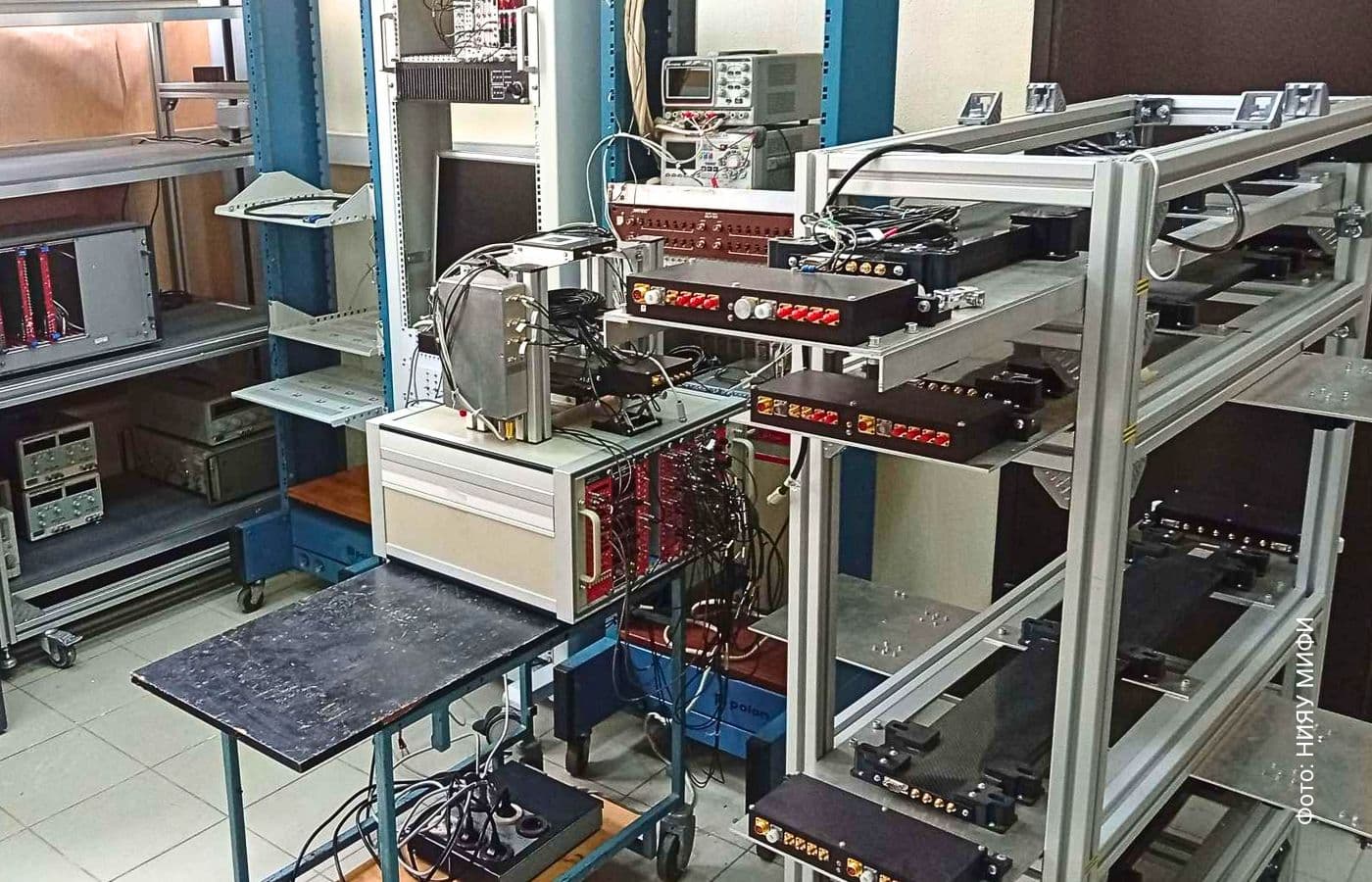
A standard problem in gamma-ray astronomy is the backflow effect. When a gamma-ray quantum converts into an electron-positron pair, secondary particles sometimes fly backward and hit the anticoincidence protection detectors, mimicking a signal from a charged particle. MEPhI developers solved this problem hardware-wise by making the protection time-sensitive. The system registers a delay of several nanoseconds between the main detector's trigger and the return of secondary particles. If such a delay is recorded, the device understands: this is not a cosmic proton, but a "parasitic" backflow. This required a time resolution of several hundred picoseconds.
The key mechanism of the device is based on a tungsten converter-tracker, where a gamma-ray quantum generates an electron-positron pair. Charged particles trigger a time-of-flight system, and calorimeters measure their energy.
The prototype was calibrated at the "Pakhra" accelerator complex in Troitsk, confirming the optimality of the technological solutions. The final device will weigh about two tons, and one of its main scientific goals is the detection of dark matter. In addition, MEPhI is developing compact satellite detectors "Natalia" and "Nadezhda" for small spacecraft.
Read more on the topic:
Never miss our newsAdd this site to your preferred sources to see us more oftenAdd on Google

















