Translated with AI from the Russian original.
One of the main problems in waste recycling is that plastic is often impossible to quickly identify. Labeling on packaging wears off, is absent, or turns out to be erroneous, and without understanding the type of material, it is difficult to dispose of it correctly. Scientists from Moscow State University have proposed a solution to this problem.
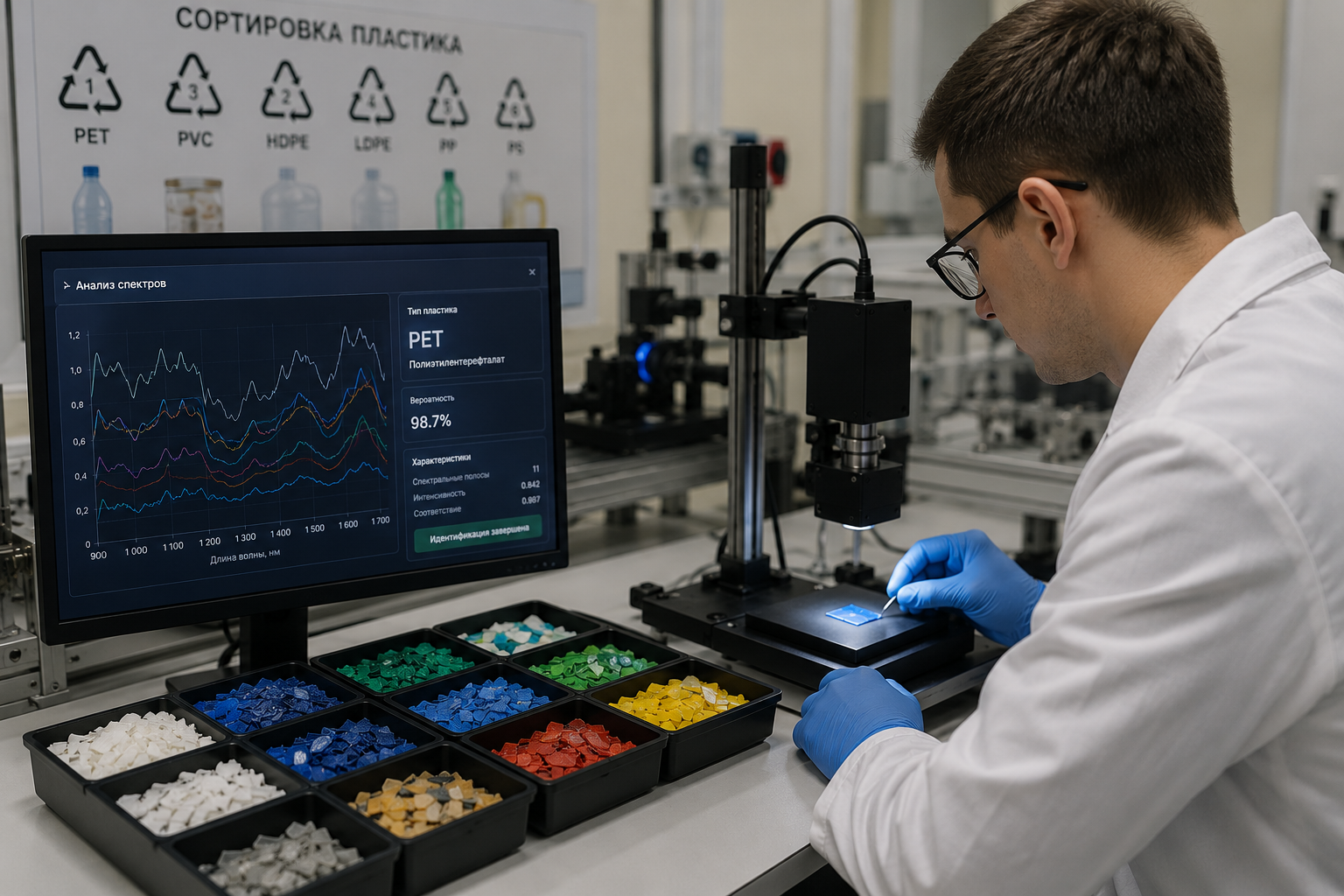
The new method is based on measuring the reflection spectra of plastic in the near-infrared range. Simply put, different types of plastic reflect light differently. The algorithm analyzes these features and determines the type of material.
The principle of operation is as follows: the sample is illuminated with white light, after which the system measures the reflection at certain wavelengths. Each type of plastic has its own combination of light absorption bands – a kind of "optical fingerprint." The algorithm compares the obtained values and determines the material.
The main advantage of the method is that it can accurately distinguish plastic even with different shapes, thicknesses, colors, and surface structures. In addition, the technology does not require a complex laboratory, expensive equipment, or lengthy measurements.
As the authors of the work clarified, the system can use the most common optical filters. The research results are published in the Q2 scientific journal Applied Optics.
Read more on the topic:
Never miss our newsAdd this site to your preferred sources to see us more oftenAdd on Google

















