Translated with AI from the Russian original.
Physicists at Immanuel Kant Baltic Federal University have synthesized a flexible polymer composite with iron compound nanoparticles that can compete with metal-ceramic sensors. As Physics of Metals and Metallography writes, the material converts an external magnetic field into an electrical signal and is free from the main drawbacks of traditional ferrites — brittleness, high cost, and biological incompatibility.
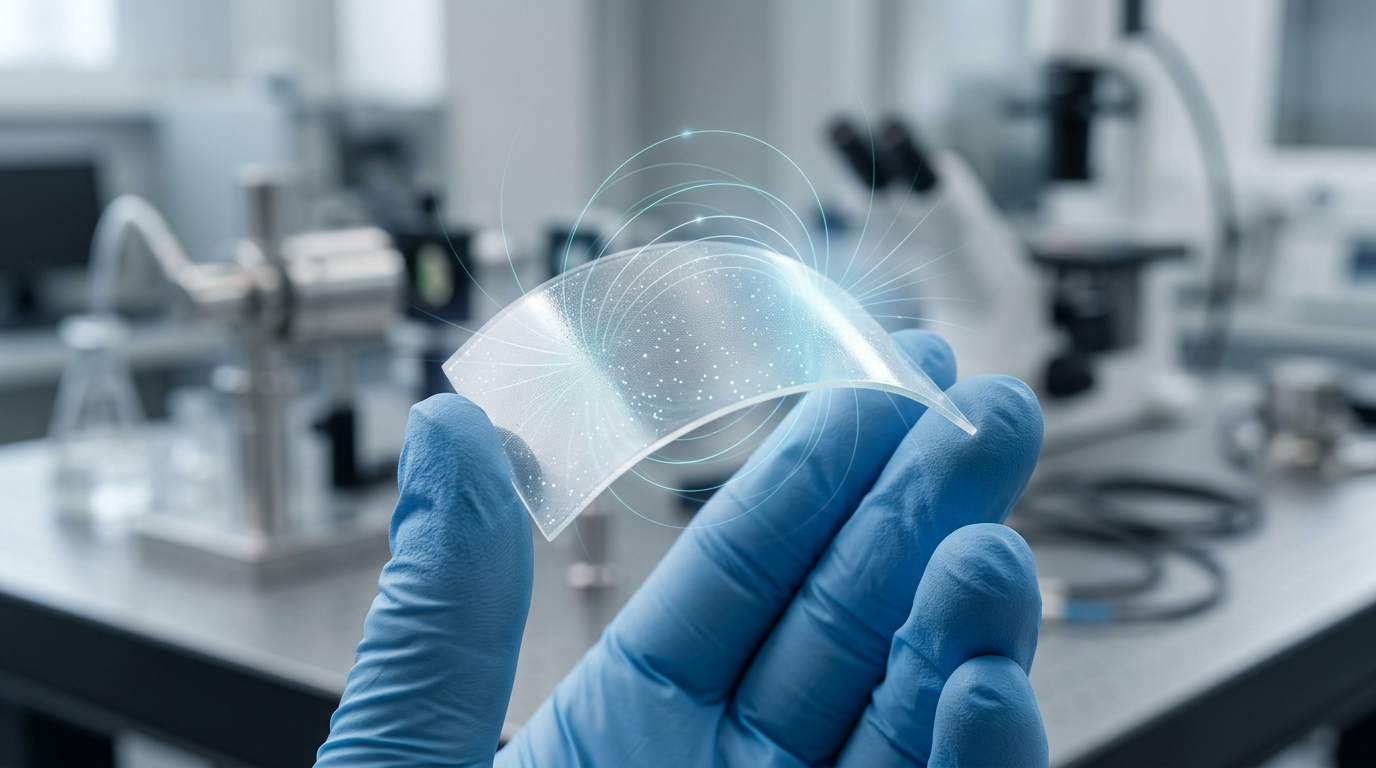
The key result was provided by the processing technology. Artem Ignatov, a researcher at the BFU Nano- and Micromagnetism Laboratory, explained to RIA Novosti: if the polymer film is dried slowly, without heating, its magnetoelectric coefficient α₃₃ reaches 35 mV/(cm·Oe) compared to 20 mV/(cm·Oe) for a sample dried quickly and at high temperature. The reason is that high-speed firing causes magnetic nanoparticles to aggregate, reducing their susceptibility to the field. The slow mode leaves the particles evenly distributed, maintaining maximum magnetoelectric response density.
The material paves the way for cheaper sensitive elements for steering sensors, smartwatches, pulse oximeters, and implantable electronics. Abandoning hot drying not only increases sensitivity by 1.5 times but also eliminates electricity costs during film molding. For Russian production of magnetic sensors, where expensive ceramic technologies traditionally dominate, this is a chance to enter the niche of wearable devices with a cheaper, more flexible, and biocompatible solution.
Read more on the topic:
- Requirements for electronics may be updated in Russia: it concerns materials for printed circuit boards
- Improved Transformers in Electronics: Scientists at NSTU Create Ferrites Capable of Withstanding Heating up to 180°C
- A new method for synthesizing material for optics and electronics was developed at ChelSU
Never miss our newsAdd this site to your preferred sources to see us more oftenAdd on Google

















