Mobile operator T2 set an absolute construction record in the Russian telecom market in 2025: the company deployed 37,000 new base stations and equipped eight thousand new sites for their placement during the year. Data transfer rates increased by an average of 33.5% over the same period, Vedomosti reported.
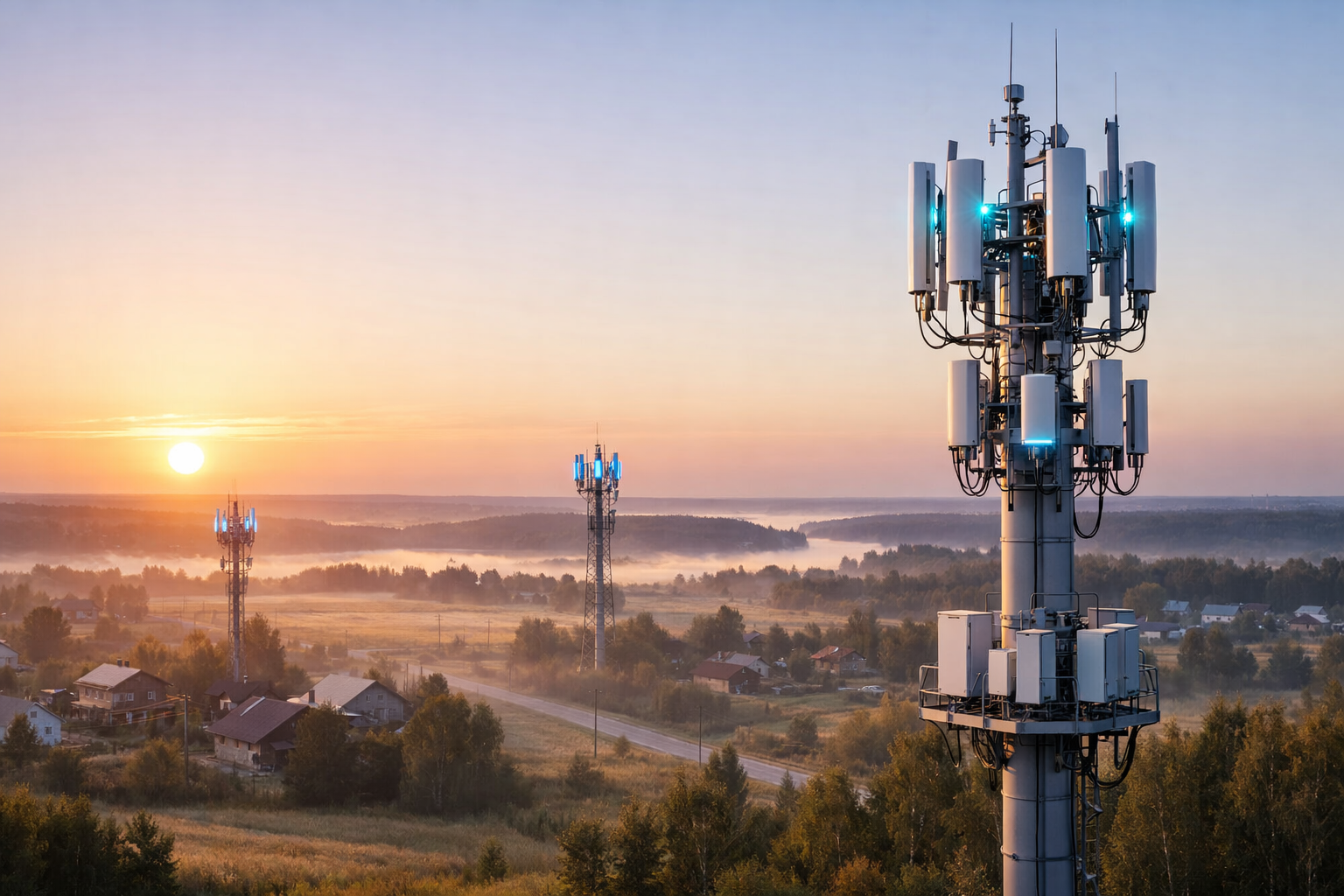
Over two years – 2024 and 2025 – the T2 network expanded by 23% in terms of the number of sites and by 29% in terms of base stations. A third of the 2025 facilities were built using domestic equipment. The network already operates over four thousand Russian "Bulat" base stations – the only domestic BSs that simultaneously support GSM and LTE standards and handle voice traffic. In September 2025, the first such station appeared in Primorye.
The record-breaking construction rates of recent years have made us a leader in the number of sites in the network among operators, which indirectly proves our leadership in coverage. An increase of eight thousand sites in a year is a record that is unlikely to be broken by any of the operators.
At the same time, the company is advancing in import substitution of the network core: in March, the integration of domestic "Protey" packet switching equipment was completed in the Volga macro-region. A similar transition is planned for the Siberia macro-region in 2026. VoWiFi technology has been deployed in all regions of the operator's presence – by the end of the year, traffic through it exceeded five million minutes per day. Readiness for the launch of NB-IoT for the Internet of Things has been implemented in all regions, and commercial implementation has begun in the Volgograd and part of the Leningrad region.
The growth in coverage is supported by geographical expansion: in 2025, T2 entered the Stavropol Territory and by September covered 75% of federal highways. Against the background of the general stagnation of infrastructure construction in the industry, T2's indicators look like an attempt to drastically reformat the balance of power in the market – primarily through its own installation teams and the Pilar tower company, which is close to first place in terms of the number of antenna-mast structures.
Read more materials on the topic:
- Dozens of kilometers of overhead lines in Crimea were moved to sewers
- FSB Receives Authority to Disconnect Mobile Communications
- Ban on Remote SIM Card Registration Reduces Fraud Activity
Never miss our newsAdd this site to your preferred sources to see us more oftenAdd on Google

















