Translated with AI from the Russian original.
In Russia, a network of high-altitude weather balloons under the "Okno" project can be considered as an alternative to the Starlink satellite system. The system was developed at the Center for Integrated Unmanned Solutions (TsKBR), the company\'s chief designer Dmitry Kuzyakin said.
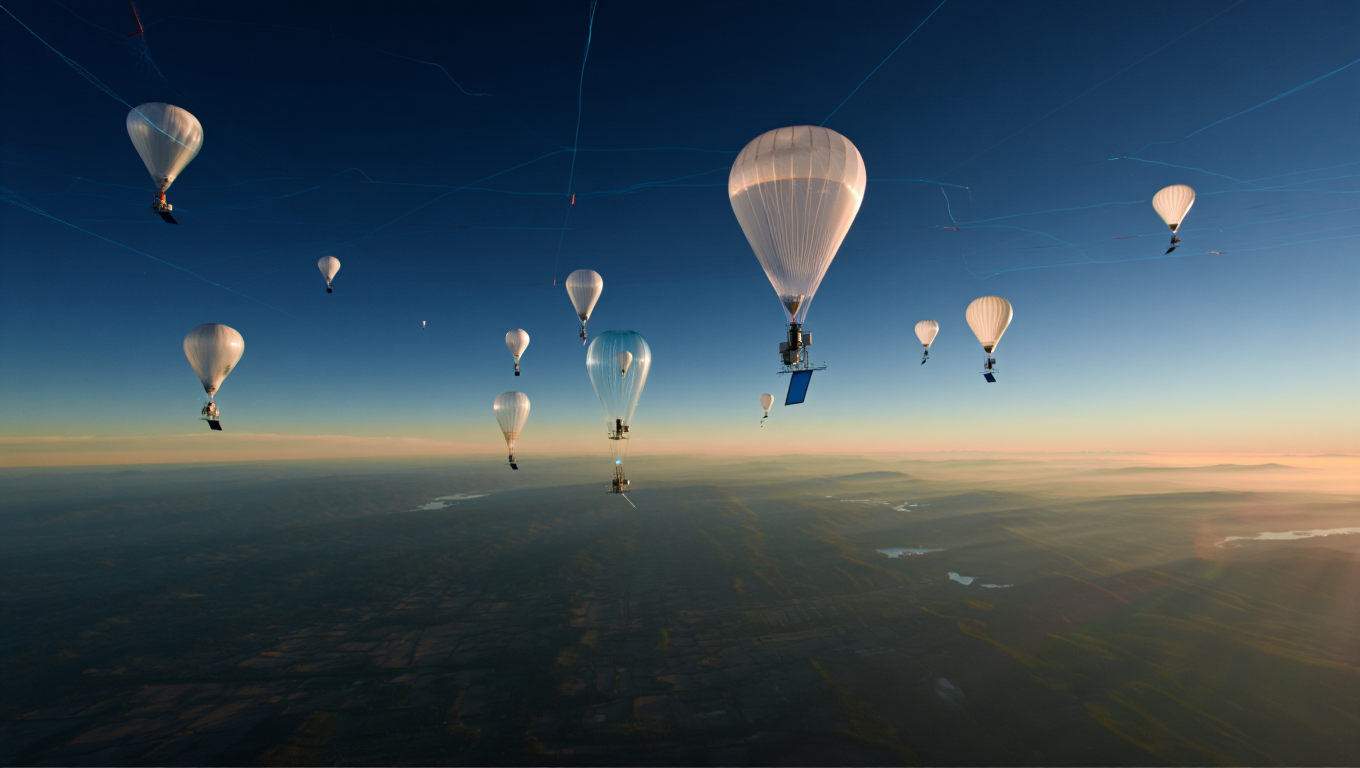
The system will make it possible to organize stable digital communications anywhere in the world with wide coverage. According to the developers\' concept, at altitudes above 20 km, a group of aerostats with base stations linked into a mesh network is deployed. The distance between the launch point and the operating area may exceed 3,000 km.
Upon arriving in the operating area, the balloons spread out and loiter, changing altitudes with different wind directions.
It is assumed that the absence of a temperature signature and near-zero radar visibility make such platforms harder to intercept, Kuzyakin clarified.
Meanwhile, as early as March, the first 16 spacecraft of the low-orbit Rassvet satellite constellation will be launched into orbit. It will become a direct response to Elon Musk\'s Starlink system, said the head of the Russian Ministry of Digital Development, Maksut Shadayev.
Read more materials on the topic:
- "No use at all": in the West, the Starlink analogue, the stratospheric "Argus," was criticized
- The stratospheric communications drone "Argus" as a Starlink analogue will be tested in March
- A Russian Starlink for 116 billion rubles and the fight against cybercrime will become the main goals
Never miss our newsAdd this site to your preferred sources to see us more oftenAdd on Google

















