Scientists from the Institute of Chemistry and Technology of Rare Elements and Mineral Raw Materials of the Kola Science Centre of the Russian Academy of Sciences have developed a new type of cement capable of replacing traditional Portland cement. The technology allows the use of waste from metallurgical and energy enterprises, significantly reducing harm to the environment, according to the Ministry of Science and Higher Education of the Russian Federation.
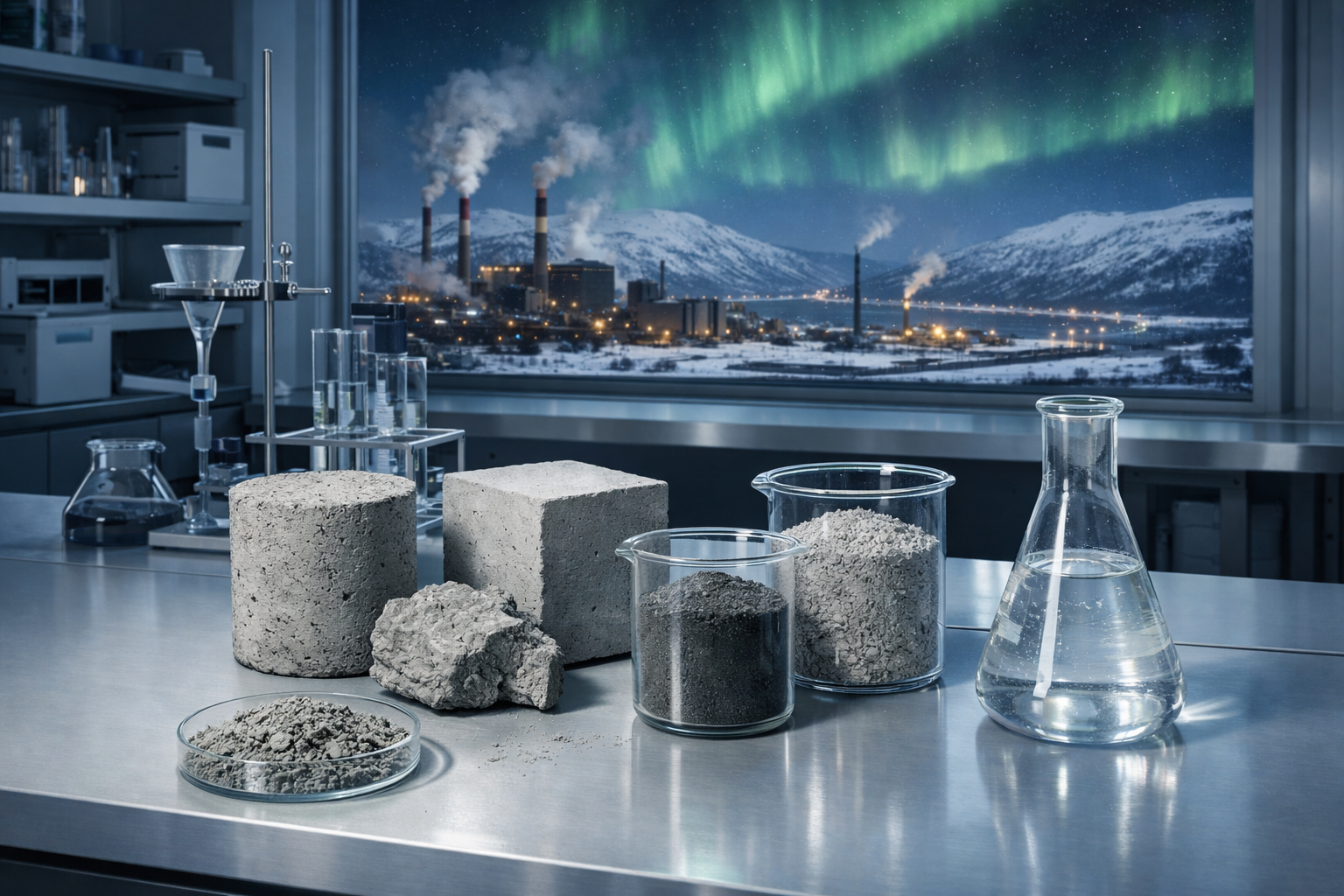
Researchers used fly ash and copper-nickel slag to create the so-called alkali-activated cement. For the experiments, waste from enterprises in the Murmansk region was used — granulated copper-nickel slag from Kola MMC and ash from Apatity CHP. Scientists used liquid glass as an alkaline activator.
Before mixing, the materials were activated in a planetary mill, after which various compositions were created with a slag content from 0 to 100%. The most durable was the composition of 80% slag and 20% ash, designated AACNS-80. Its compressive strength was 99.9 megapascals — an indicator comparable to the best grades of concrete. According to researchers, the material can be used not only in construction, but also for laying developed spaces in mines.
The main advantage of the new technology is its environmental friendliness. The production of the material does not require high-temperature firing, which sharply reduces the carbon footprint. In addition, the process recycles two types of industrial waste, turning them into sought-after building materials.
Read more materials on the topic:
- Replaces cement: a new building material made of ash and slag was created at NSU
- Nanohybrid cement: TPU scientists made drilling 18% cheaper
- Strengthened by 30%: MISIS scientists increased the strength of cement using graphene
Never miss our newsAdd this site to your preferred sources to see us more oftenAdd on Google

















