The acceptance of the active zone for the first of two RITM-400 ship reactors intended for the lead nuclear icebreaker "Russia" - the flagship of Project 10510 code "Leader" - has been completed at the Engineering Plant. This is the first batch of nuclear fuel created specifically for the newest reactor plants that will power the world's most powerful nuclear icebreaker fleet.
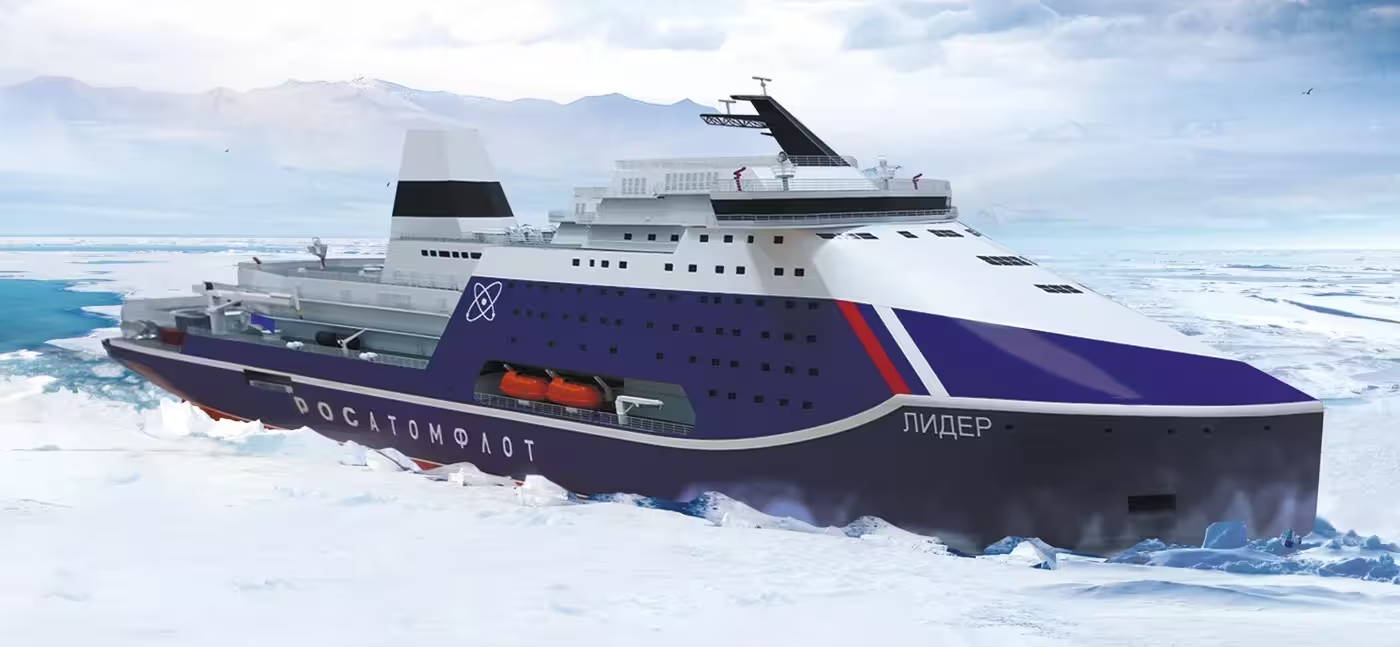
The icebreaker "Russia" is equipped with two RITM-400 reactors, whose power exceeds similar RITM-200 installations used on universal nuclear icebreakers of Project 22220 by almost 1.8 times. Thanks to a total power of 120 MW on the propeller shafts, the icebreaker will be able to confidently overcome solid ice over 4 meters thick.
Unlike universal icebreakers, which are designed to operate both in the deep-sea areas of the Northern Sea Route and in the shallow estuaries of the Arctic rivers, the "Leader" icebreaker is primarily designed for extreme conditions - ensuring continuous movement along the Northern Sea Route even in winter. Its key advantage is unsurpassed icebreaking capability and endurance, rather than maneuverability in shallow water.
Read more on the topic:
- The world's most powerful icebreaker of Project 10510 "Leader" will receive the "MUSS-1032" control system
- Rosatom has supplied innovative nuclear fuel to Uzbekistan for a research reactor
- Nuclear fuel for the under-construction nuclear icebreaker "Chukotka" was manufactured at Rosatom
Never miss our newsAdd this site to your preferred sources to see us more oftenAdd on Google

















