Translated with AI from the Russian original.
Scientists from the Murom Institute, a branch of Vladimir State University (MI VlSU), plan to create a signal generator for 5G and 6G communication systems within two years. The device promises high noise immunity and data transfer speed, which is especially important for modern and future communication networks.
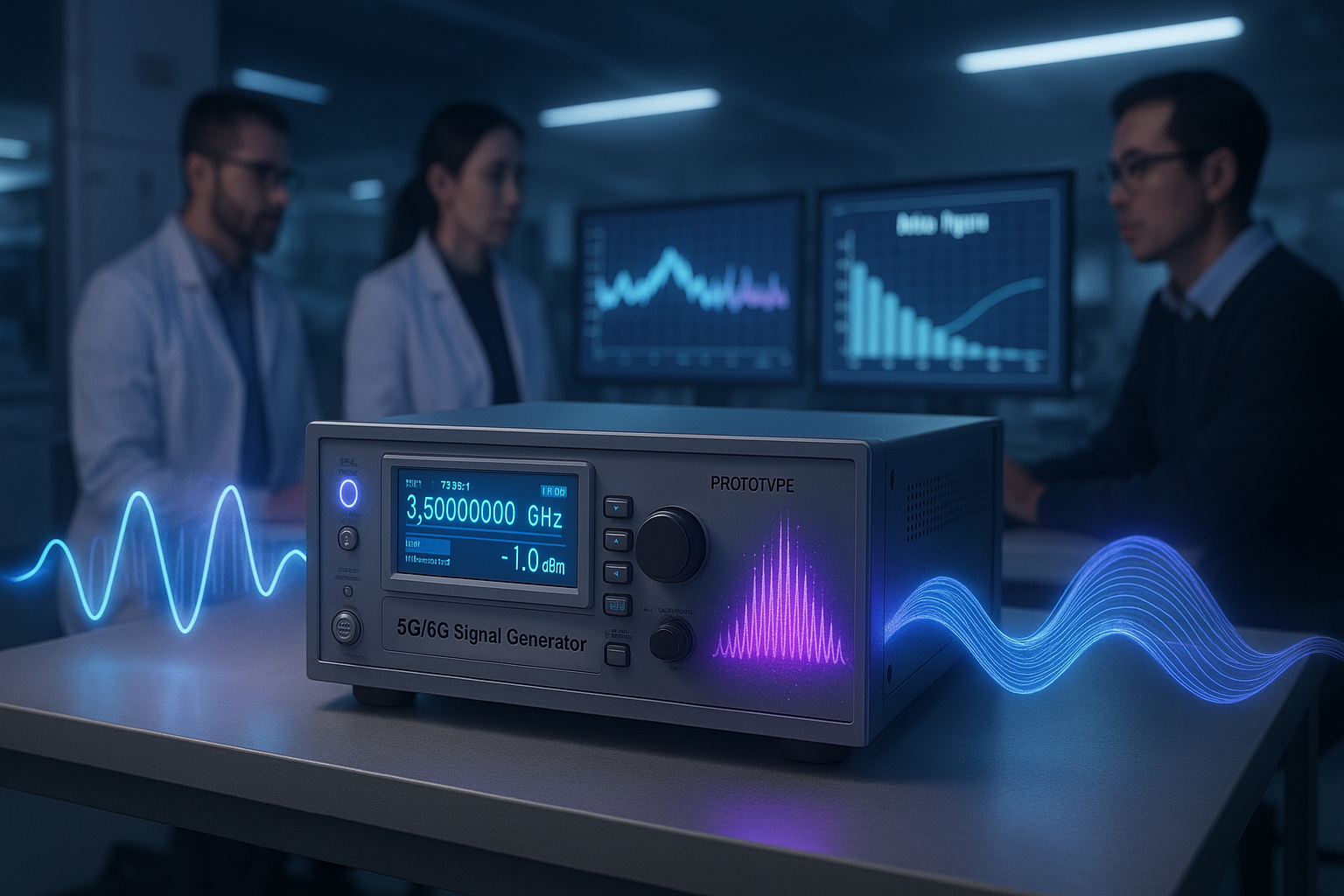
The signal generator is called the "heart" of radio systems. It generates a signal for antennas in which user information is encrypted-movies, photos, and other data. The lower the device's own noise level, the more stable and faster the data transmission. In the project, scientists intend to develop low-noise generators that will be installed at 5G base stations, taking into account the requirements of future sixth-generation systems, the standards of which are being formed now.
The project is funded by a grant from the Russian Science Foundation and is designed for two years. The first year will be devoted to theoretical research and the publication of scientific papers, and the second year will be devoted to prototyping and assembling a laboratory sample.
As part of the new project, an approach to signal generation using spectral components in high Nyquist zones is proposed. This is expected to reduce noise levels and increase the energy efficiency of devices, which is important for any radio system.
Low-noise signal generators are in demand not only in telecommunications, but also in radar, measuring equipment, remote sensing systems, and other areas of radio engineering. A low level of phase noise improves the range and noise immunity of radio systems, making the project universal and significant for engineers developing advanced technologies.
Read more on this topic:
- Russian signal generator with a sampling rate of up to 30 GSa/s was presented at the ExpoElectronica 2025 exhibition
- Antennas for the Internet of Things, made entirely of domestic components, have been created in Russia
- Will increase data transfer speed by 20-30%: Russian scientists have created a device for fast radio signal transmission
Never miss our newsAdd this site to your preferred sources to see us more oftenAdd on Google

















