Translated with AI from the Russian original.
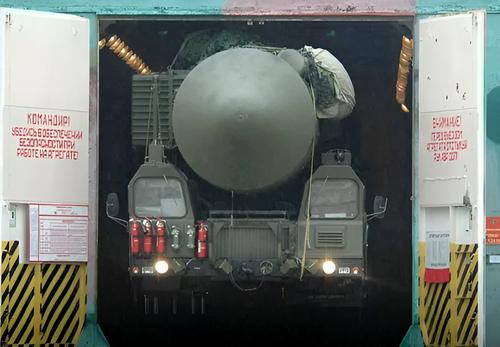
Belarus, together with Russia, is conducting research into the creation of high-precision weapons, including the modernization of existing missiles, in particular, the Oreshnik medium-range ballistic missile (MRBM). This was announced by the State Secretary of the Security Council of the Republic, Alexander Volfovich.
He recalled that missile construction in Belarus began virtually from scratch. Subsequently, together with China, they created the Polonez multiple launch rocket system, which was successfully modernized at Belarusian enterprises.
Today, the range of high-precision weapons is 300 km. In addition, the country has a modern Buk anti-aircraft complex with a firing range of 70 km or more, the Sapphire grenade launcher complex, and others.
The questions are already being raised as follows: equipping these missiles with nuclear warheads as well, how to integrate Oreshnik technologies, how to jointly adjust and work in this direction with the Russian side, creating a modern missile.
The Chairman of the State Military-Industrial Committee of Belarus, Dmitry Pantus, noted that the republic is working on manufacturing a launcher for Oreshnik.
Read also:
Foreign customer was not satisfied with the color of the Russian Su-34E fighters
Named the key Russian combat aircraft
Su-27 fighter drove away the American F-15 from the Tu-22M3 bomber: video appeared
Never miss our newsAdd this site to your preferred sources to see us more oftenAdd on Google

















