The Ministry of Defense of Russia has for the first time shown a video of the combat use of the latest self-propelled artillery guns (SPG) "Hyacinth-K". The calculations were guided to the targets using coordinates from drone reconnaissance operators.
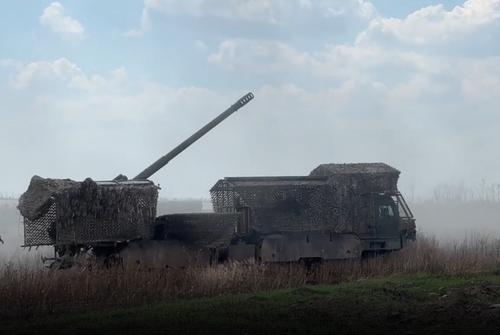
Having received target designation, the "Hyacinth-K" crews quickly moved to the position, deployed the guns and fired a series of accurate shots with 152-mm shells from a distance of more than 30 kilometers.
It is noted that the use of a pair of combat vehicles from one firing position made it possible to simultaneously cover several objects.
The "Hyacinth-K" self-propelled gun was officially presented in May 2025. The complex was created on the basis of the "Malva" wheeled system with a 152-mm gun from the towed gun "Hyacinth-B". The installation is capable of hitting targets at a distance of up to 50 km, a high degree of automation allows you to complete the task in 2-3 minutes.
Earlier www1.ru reported that the half-century-old T-62 tank became a self-propelled gun thanks to the farm threshold: the firing range increased by two times.
Read also materials:
Russia and India have signed several new defense contracts: Su-57 and S-400 air defense system?
The fourth batch of new Su-34 bombers was built for the Russian Aerospace Forces in 2025
Never miss our newsAdd this site to your preferred sources to see us more oftenAdd on Google

















