Translated with AI from the Russian original.
A total lunar eclipse will occur on the night of September 7-8, 2025. This astronomical event will begin at 22:28 local time and end at 03:55. The maximum phase of the eclipse, reaching 136%, will occur at 01:12, when the Moon will be near its culmination. Anyone can observe the phenomenon without special instruments.
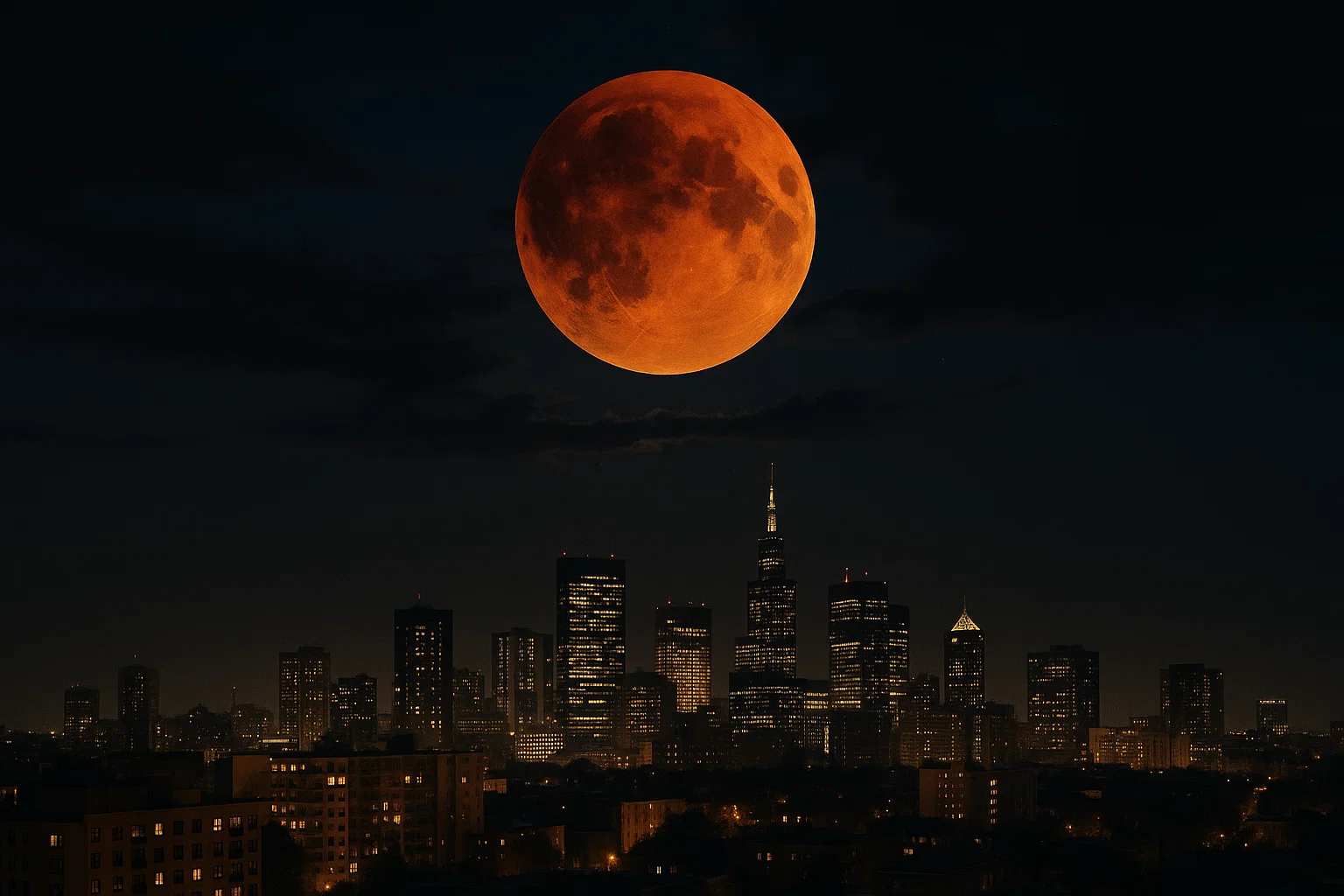
The total phase of the eclipse will last from 00:31 to 01:52, the umbral phase from 23:27 to 02:56, and the penumbral phase from 22:28 to 03:55. The visible darkening of the lunar disk will be noticeable from approximately 23:00 to 03:00. During the maximum, the Moon will pass through the Earth's shadow, acquiring shades of red - from copper to dark brown. This is due to the refraction of red light in the Earth's atmosphere. The brightness and color of the Moon will depend on the level of dust in the atmosphere, which may vary, for example, due to volcanic activity.
Telescopes are not required to observe the eclipse, although binoculars will allow you to better see the boundary of the Earth's shadow and details of the lunar surface. The lunar eclipse is one of the key astronomical events of autumn 2025. The next similar phenomenon in the region will not occur soon, which makes the observation on September 7 particularly significant.
Read more related articles:
Up to 100 bolides per hour: the peak of the Perseid meteor shower will occur in mid-August
The moon may interfere with the observation of the Perseid meteor shower in August
Russian astronomers: The moon is losing its gas envelope due to the Perseid stream
Never miss our newsAdd this site to your preferred sources to see us more oftenAdd on Google

















