Translated with AI from the Russian original.
The Russian training ship "Smolny" of the Baltic Fleet, with cadets on board, has entered the port of Dar es Salaam in Tanzania. Here, the Project 887 vessel will replenish its supplies of water, fuel, and food, according to the fleet's press service.
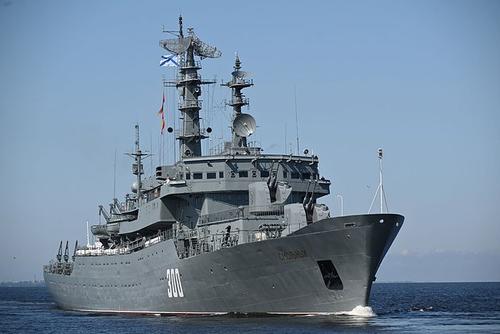
In the coming days, the Russian side will conduct a tour of the Baltic Fleet training ship for servicemen of the Tanzanian Navy.
The crew of the TS "Smolny" are carrying out a training program in navigation, communications, and seamanship. More than 300 cadets are participating in the sea voyage.
The visit to Tanzania was the fifth port call in a foreign country. Previously, the Baltic sailors visited the ports of Equatorial Guinea, the Republic of the Congo, South Africa, São Tomé and Príncipe.
Characteristics of Project 887 vessels:
- Displacement - 7210 t
- Length - 138 m
- Width - 17.2 m
- Height - 17 m
- Draft - 5.5 m
- Engines - diesel with a capacity of 16,000 hp
- Speed - 20 knots
- Armament: AK-726, AK-230, Smerch RBU-2500 rocket launcher
Subscribe to the "First Technical" news on Google News to stay up to date with the latest events from the world of science and technology.
Read more on the topic:
Drone with a lightweight Kalashnikov assault rifle in conjunction with a reconnaissance drone began to be used by the Russian military
Detects drones at a long distance: the "Rasada" acoustic sensor system from TsBST is presented
New S-350 Vityaz and S-400 Triumf SAM systems enter the Russian army
Never miss our newsAdd this site to your preferred sources to see us more oftenAdd on Google

















