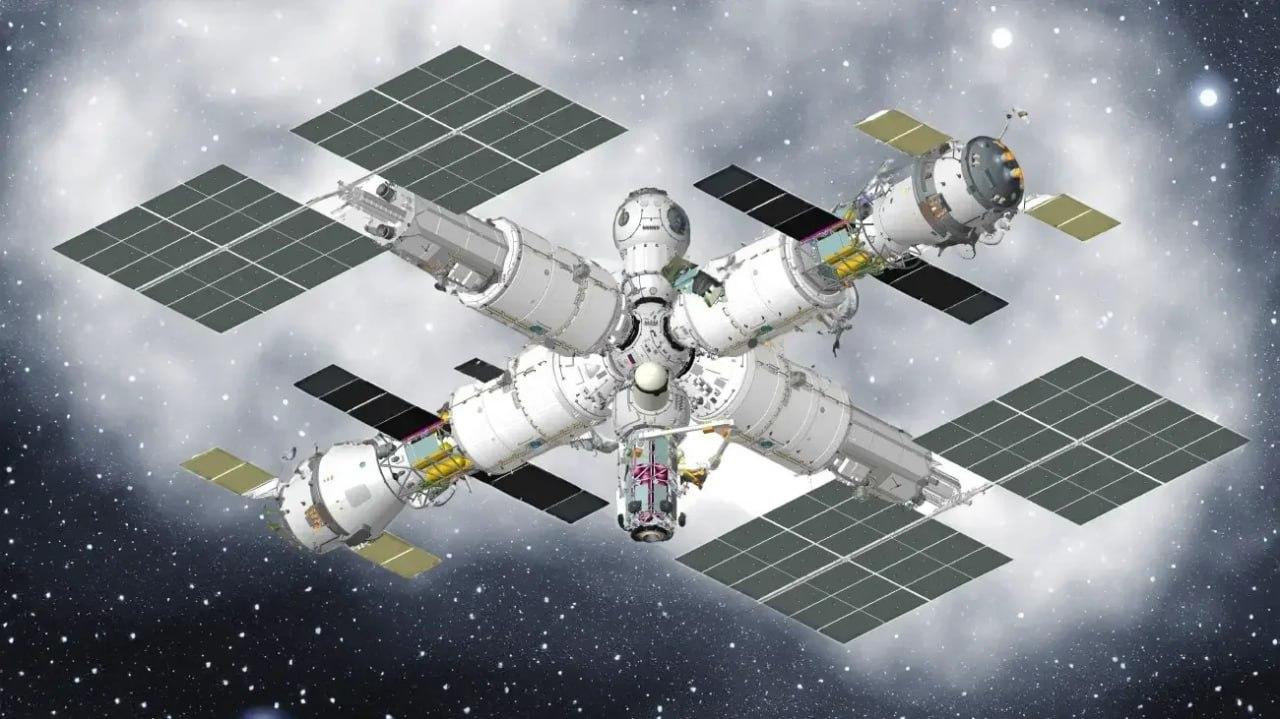
Rocket and Space Corporation "Energia" (part of the Rostec Group) has been given the opportunity not to pay extra for foreign parts for the scientific and energy module of the Russian Orbital Station (ROS), the prices of which turned out to be three times higher.
The Arbitration Court of the Moscow District released RSC Energia from the need to pay an additional 243 million rubles to the already paid 1.3 billion rubles in advance. The case has been sent for a new trial.
Back in 2016, RSC Energia ordered components for the scientific and energy module (NEM-1) from TsNII "Cyclone". However, documents from the supplier justifying the price were never provided. In 2019, the Main Investigation Department of the Investigative Committee of the Russian Federation for the Moscow Region initiated a criminal case on embezzlement, which involved several top managers of the corporation.
The corporation did not pay the remaining amount under the contract and requested documents from TsNII "Cyclone" confirming the validity of the prices for components. An examination conducted by the S.A. Lebedev Institute of Precision Mechanics and Computer Engineering of the Russian Academy of Sciences showed that the prices for components were three and six times higher than the average market prices and price lists of manufacturers, respectively.
Despite this, the courts refused RSC Energia to recognize the contract as invalid, pointing out that the corporation itself agreed to the proposed prices and received the components. It is important to note that in December 2016, TsNII "Cyclone" was the only participant in the procurement, which also affected the situation.
The launch of the scientific and energy module NEM-1, which was originally planned for 2015, has been repeatedly postponed, and is now expected to take place no earlier than 2027.
Earlier www1.ru reported that the power system of the Russian Orbital Station will exceed the power sources of the ISS.
Read materials on the topic:
Roscosmos and China will build a power plant on the Moon: Putin and Xi Jinping signed a memorandum
Roscosmos is introducing a robotic complex for assembling RD-191 engines: works without breaks
Never miss our newsAdd this site to your preferred sources to see us more oftenAdd on Google