The medical ship "Nikolay Pirogov", serving remote settlements of the Khanty-Mansi Autonomous Okrug, has received a technological update. In 2025, artificial intelligence developed by the Medical Information and Analytical Center was implemented on board. The first module - the "Third Opinion" service - automatically analyzes X-ray images, highlighting areas with possible pathologies and forming a preliminary conclusion for the radiologist.
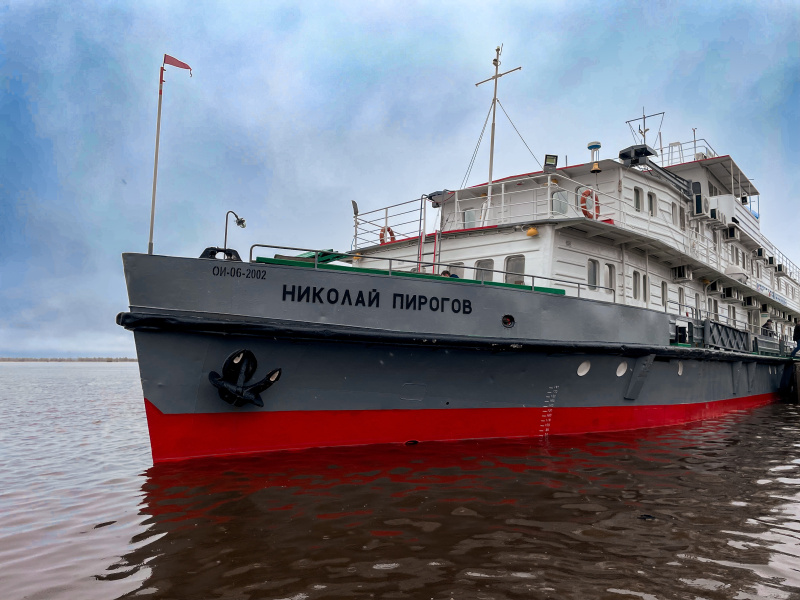
According to the operator, the system reduces the time for making a primary diagnosis by 58% and reduces the burden on specialists. The ship, equipped with digital X-ray, ultrasound machines and a laboratory, can now perform up to 84 studies per day without expanding the staff of 19 doctors. This is critical for routes along the hard-to-reach banks of the Ob and Irtysh.
In July 2025, the launch of the second AI module to support mammography studies is planned. In the autumn, both solutions will be integrated into the new medical ship "Saint Luke", capable of receiving up to 50 patients daily.
The integration of artificial intelligence makes the medical ship a high-tech platform. This speeds up the adoption of medical decisions and gives residents of remote settlements access to modern assistance without leaving their native places.
The history of the flotilla dates back more than 50 years: the first voyage of the ship "Zdorovye" took place in 1968. "Nikolay Pirogov", launched in 1993, has now become a testing ground for digital innovations in Russian telemedicine.
Read more materials on the topic:
A program for accelerated design of materials for regenerative medicine has been developed at ITMO
Biomaterial for the treatment of osteoporosis developed by scientists at Tomsk State University
AI diagnoses the cause of a heart attack in 400 ms: innovation in the analysis of OCT images