On the night of June 17, around 00:49 Moscow time, a powerful X1.2-class flare occurred on the Sun. The event was recorded in active region No. 4114, where two significant flares of M8.4 and M6.3 levels had already been observed earlier on June 15 and 16. According to space observatories, this zone remains geoeffective, that is, capable of affecting the Earth, as it is located close to the central solar meridian.
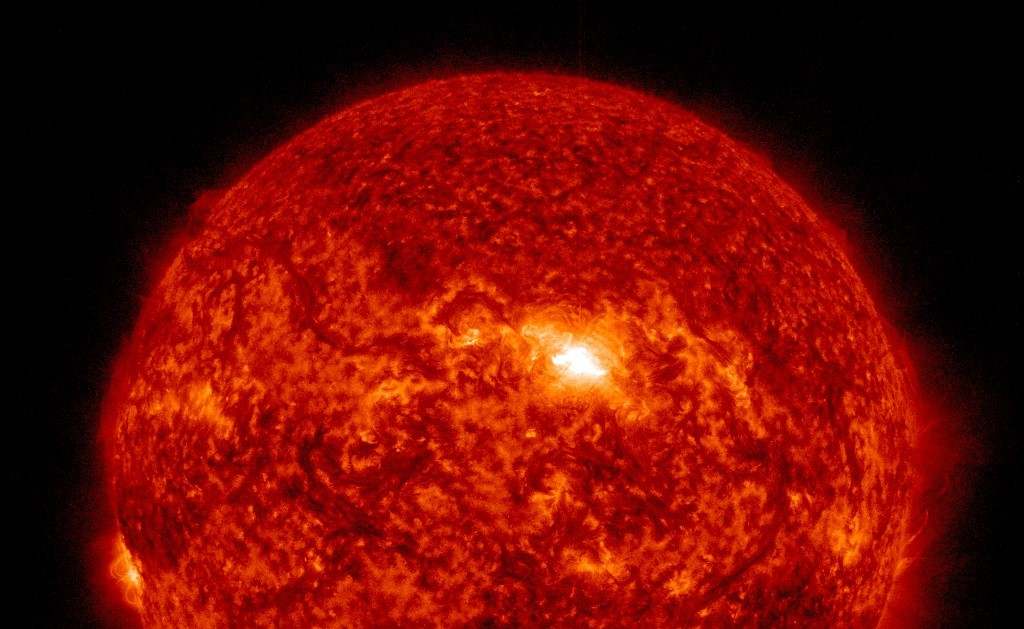
The incandescent mass ejected by the explosion has not yet appeared in the field of view of space coronagraphs. Scientists expect that it will be possible to record it in at least an hour. Previous flares in this region were also accompanied by coronal mass ejections (CME), but their trajectories did not affect our planet. If there have been no significant changes in the global configuration of the Sun's magnetic field over the past two days, there is a possibility that the new ejection will pass by the Earth along the same trajectory.
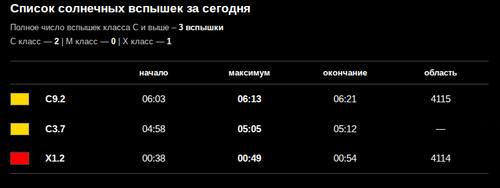
In 2025, this is already the eighth X-class flare, with the current one being the fourth most powerful. The record of the year is still held by the X2.7 event of May 14.
Read more on the topic:
It will be hot: the second powerful flare occurred on the Sun on June 16
The most powerful flare of the penultimate class M6.8 in June occurred on the Sun
The most powerful flare in a month occurred on the Sun on June 15
Never miss our newsAdd this site to your preferred sources to see us more oftenAdd on Google