KamAZ has confirmed the upcoming debut of a light truck in category B. The company's annual report states that in the second half of 2025, the "Kompas" cabover model range will be supplemented by a fifth model with the index "3".
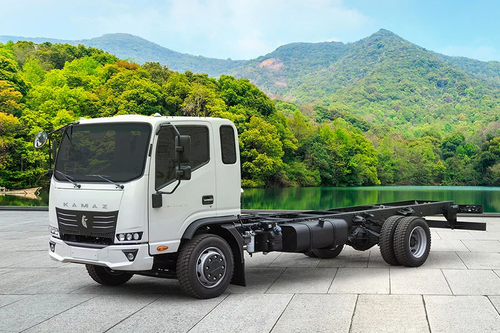
We are talking about the long-awaited KamAZ truck in category B with a gross weight of up to 3.5 tons. It is likely that the new product will be certified in such a way that the car does not fall under the criteria of the "freight framework" of Moscow.
KamAZ "Kompas 3" has not been officially shown, but it is expected that the cab will be unified with "Kompas 5", the loading height will decrease, a less massive frame and smaller wheels will appear. Also, the new product should have modern one-piece headlights instead of modular Hella-type optics from the very start of sales.
It can be assumed that the "Kompas 3" will retain a 2.2-liter turbodiesel (122 hp, 320 Nm) in conjunction with a 5-speed "mechanics". KamAZ does not hide the fact that even the "younger" truck will de facto be more durable than indicated in the factory specifications.
Read more on the topic:
Robotization at one of KamAZ's plants has reached 85%
KamAZ buses and trucks began to be assembled in Venezuela
KamAZ has launched the latest all-wheel drive tractor KAMAZ-65954 into mass production
Never miss our newsAdd this site to your preferred sources to see us more oftenAdd on Google

















