The most intense part of the magnetic storm caused by the solar ejection on June 1 has passed. According to observatories and satellites, new bursts are possible on June 2, but they will not reach the G5 level.
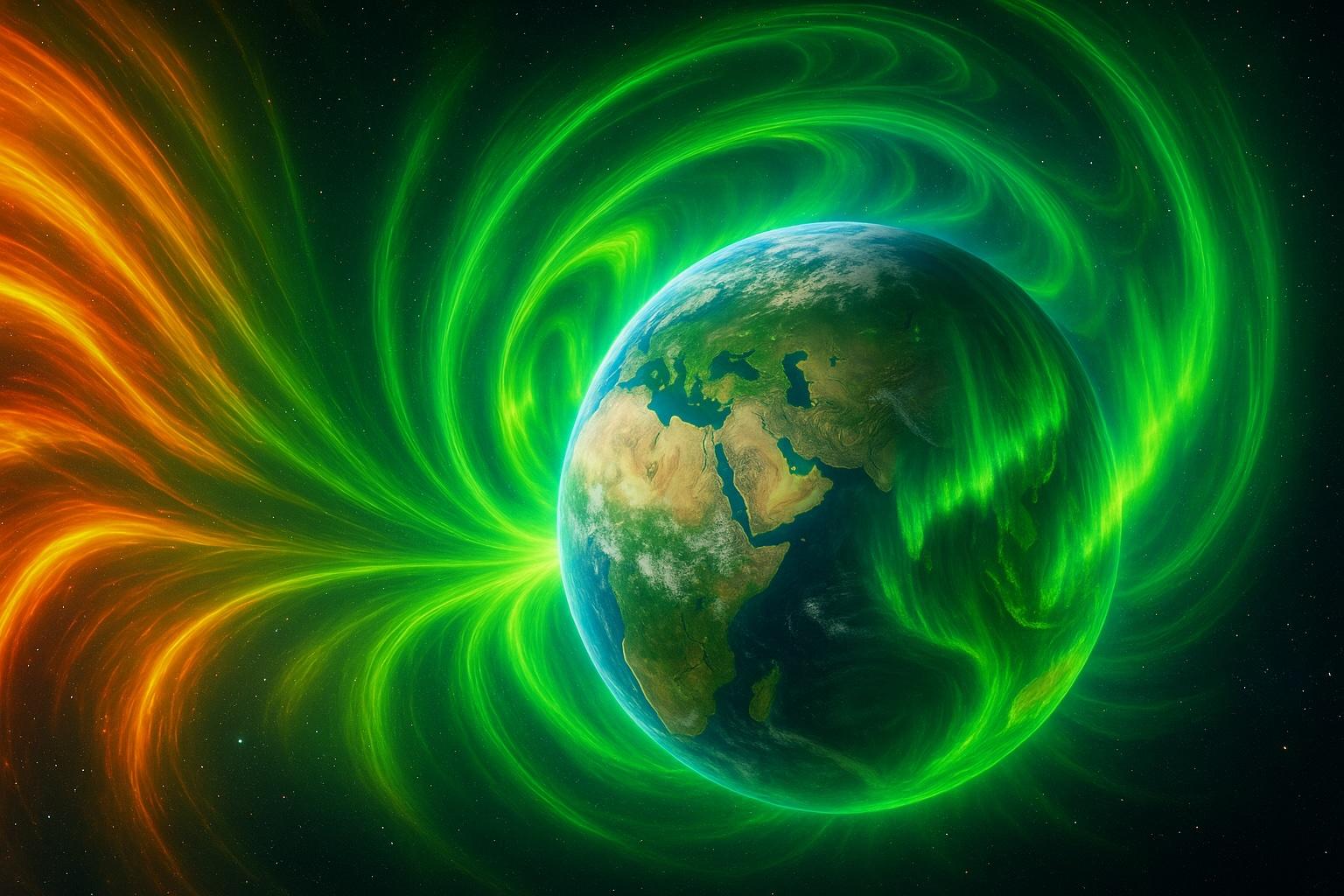
The ejection was characterized by high speed (about 1100 km/s) and temperature (2-3 million °C), but turned out to be weaker in density and magnetic field strength than the flare on May 11, 2024. According to scientists, this limited the strength of the storm.
The peak of disturbances was around noon on June 1, when the geomagnetic disturbance index Kp reached G4. However, the positive direction of the interplanetary magnetic field then began to restrain the further development of the storm.
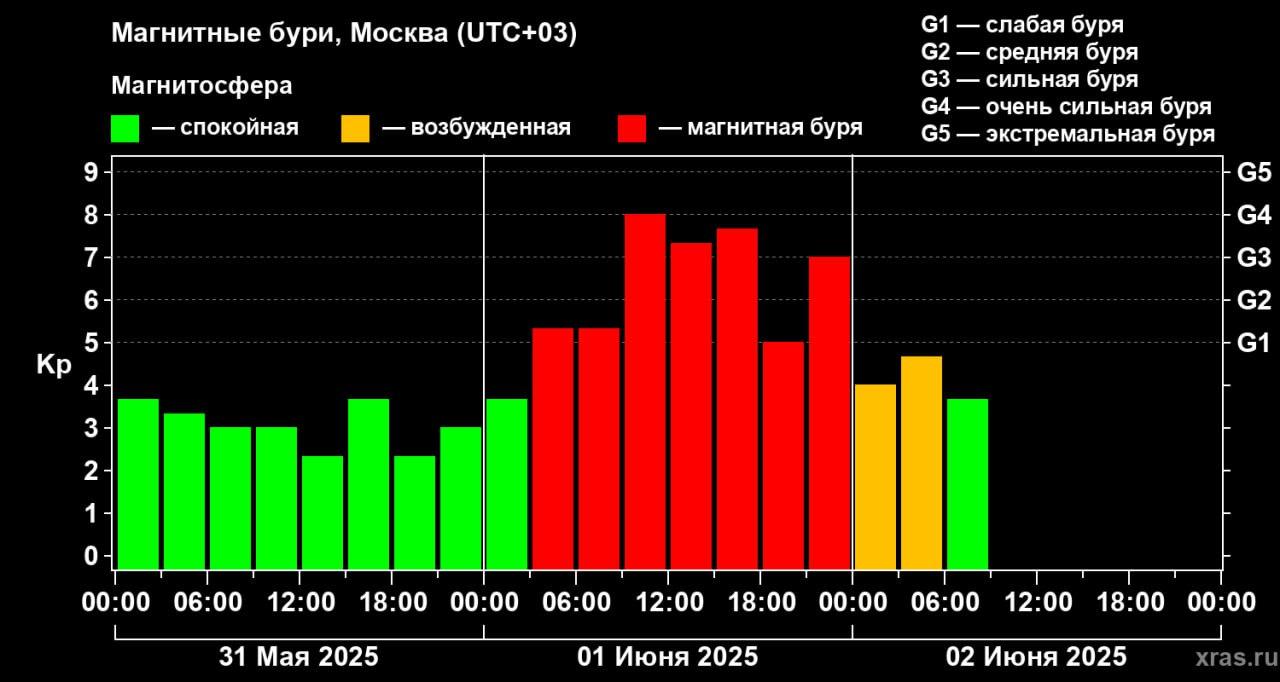
On the morning of June 2, conditions near Earth remain tense: the speed and temperature of the solar wind are still high, the field "blockade" has disappeared, and bright auroras are again observed over North America. A late arrival of the second part of the ejection is also possible, as it was double.
Full recovery of the geomagnetic situation is expected no earlier than June 4.
Read materials on the topic:
Magnetic storms are expected: a large cloud of plasma will reach Earth on Sunday afternoon
Never miss our newsAdd this site to your preferred sources to see us more oftenAdd on Google