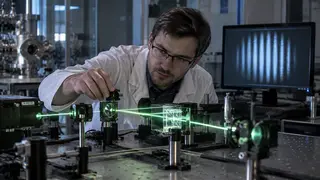
The booster synchrotron has been successfully tested at the Shared Use Center "Siberian Ring Source of Photons" (SKIF). During the tests, the first electron beam was recorded, which made two full revolutions. Thus, all systems of the engineering complex are working correctly, including the linear accelerator. Scientists have already registered the movement of the beam using synchrotron radiation and plan to increase its energy to the design level of 3 GeV in June.
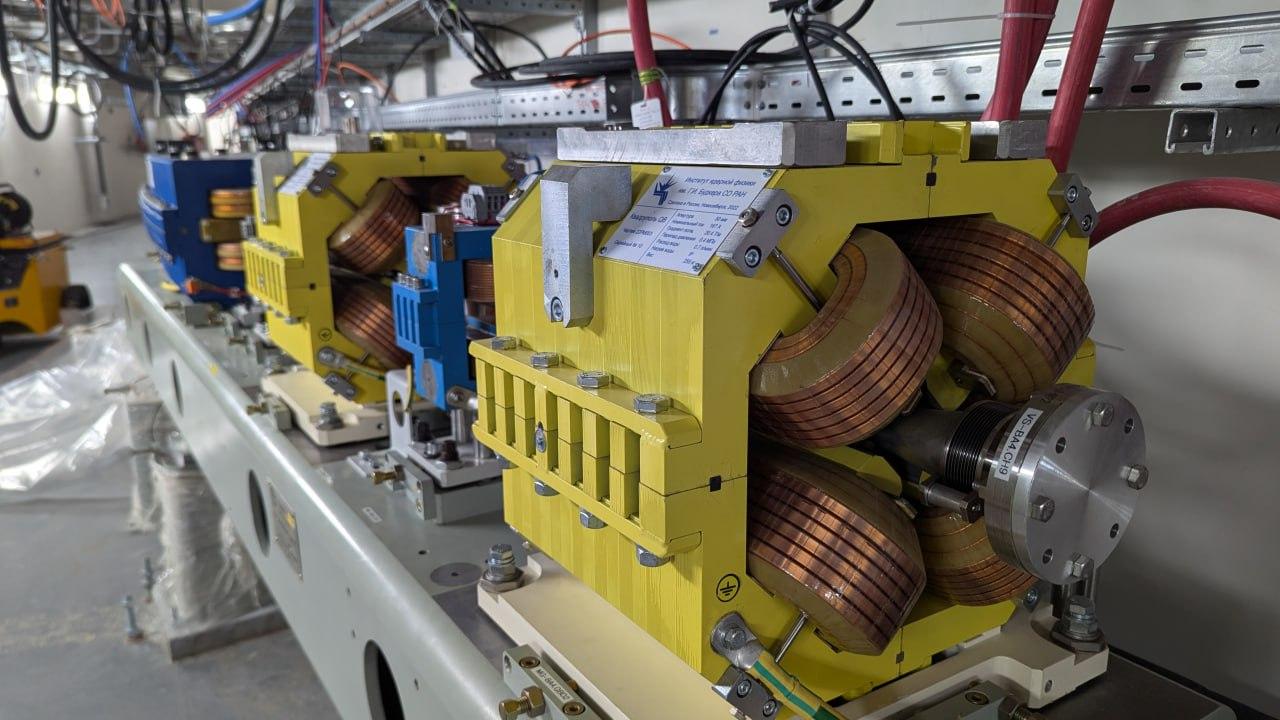
The injection complex became the basis of SKIF. In it, electrons are created in a linear accelerator, collected into a beam and accelerated to 200 MeV. Then they enter the booster synchrotron, where their energy reaches 3 GeV, after which the beam is directed to the main storage ring. Center Director Evgeny Levichev noted that the next stage, related to the launch of the storage ring, will be more difficult than launching the booster. The fact is that the booster synchrotron uses proven technologies, while the storage ring has become a unique installation with advanced parameters.
The SKIF project is a megascience project with a fourth-generation synchrotron. The installation should significantly increase the brightness of radiation compared to other global sources.
The new system will open up access for scientists to processes that were previously unavailable for study. Specialists have prepared a program for the first six experimental stations and plan to create 24 more stations to study new directions.
Read more on the topic:
What technologies are used in the SKIF booster
A facility for testing materials for strength was launched at the SKIF synchrotron site
Engineers from TSU started installing equipment for SKIF
Never miss our newsAdd this site to your preferred sources to see us more oftenAdd on Google