Translated with AI from the Russian original.
The Omoda C5 and Jetour T2 crossovers have received vehicle type approval (OTTS). This confirms their readiness to start sales in Russia. The assembly of these cars will be set up at the Avtotor plant in Kaliningrad.
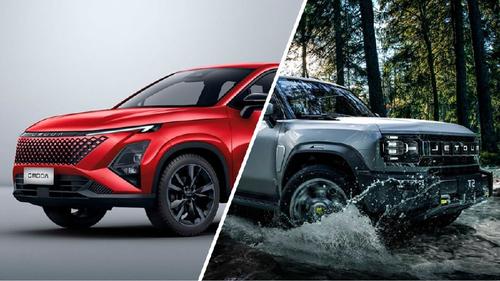
Omoda C5 stands out for its compact size. The length of the car is 4400 mm, width is 1830 mm, height is 1588 mm. In the basic configuration, the car is equipped with a 1.5-liter engine with a capacity of 147 hp, paired with a variator and front-wheel drive. A modification with a 1.6-liter engine, a 7-speed robotic gearbox and all-wheel drive is also available.
Jetour T2 is a larger crossover with dimensions of 4785 x 2006 x 1880 mm. Under the hood is a 2-liter engine with a capacity of 245 hp. Buyers will be offered a choice between a 7-speed "robot" and an 8-speed automatic transmission, as well as all-wheel drive as standard.
Earlier www1.ru reported that the Avtotor plant assembled a batch of unique BMWs from the remnants of car kits.
Read materials on the topic:
Kaliningrad Avtotor started producing electric motors
Unprecedented generosity promotion: Avtotor has revised prices for BAIC cars of Russian assembly
Half-century-old "Zhiguli" turned into an electric car: a unique transformation for 1 million rubles
Never miss our newsAdd this site to your preferred sources to see us more oftenAdd on Google

















