At MIPT, optimal conditions were selected for the interaction of protons and boron nuclei, which makes it possible to activate thermonuclear reactions without the use of powerful lasers. The discovery will accelerate the development of simple and environmentally friendly thermonuclear reactors, the university press service reported.
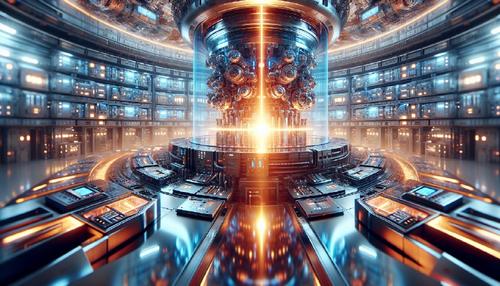
We have discovered a new approach in the field of non-neutron reactions, demonstrating that a proton-boron thermonuclear reaction is possible without external sources, such as lasers or proton beams. Understanding the mechanics of this reaction will pave the way for creating safe and efficient energy sources.
One of the most promising reactions for such installations is the interaction between boron-11 and protons. This reaction releases a significant amount of energy and forms beryllium-8 and alpha particles (which can be used to generate electricity). However, traditionally, initiating this reaction requires accelerating particles to high energies using powerful lasers.
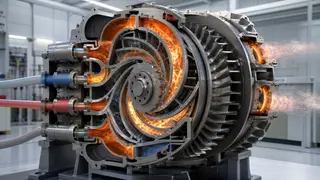
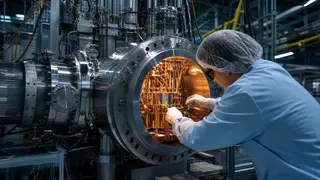
A solution to this problem has been found at MIPT. Specialists used magnetic traps and vacuum discharge systems to form plasma from boron and protons. This made it possible to reach the necessary temperatures for "laser-free" thermonuclear fusion.
The computer model created by the researchers helped optimize the shape and location of the electrodes, which increases the frequency of reactions between boron and protons and the number of alpha particles formed. Scientists hope that their work will become an important step towards creating boron thermonuclear reactors and the practical use of non-neutron thermonuclear fusion for obtaining clean energy.
Earlier www1.ru reported that
Read materials on the topic:
Never miss our newsAdd this site to your preferred sources to see us more oftenAdd on Google