Translated with AI from the Russian original.
The Ministry of Economic Development of Russia will not suspend the experiment on the use of drones for air cargo transportation and aviation work. This was announced by Artyom Sheikin, Deputy Chairman of the Council for the Development of the Digital Economy under the Federation Council.
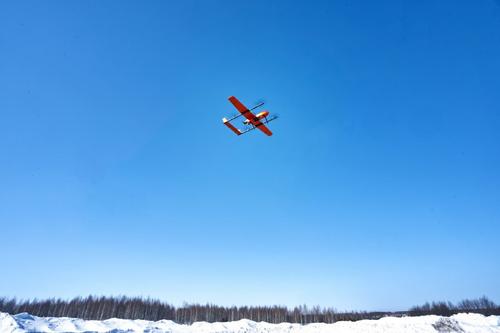
The department will continue to work on solving the problems of satellite signal instability for unmanned aircraft systems (UAS) at an altitude of less than 30 meters.
Within the framework of the EPR on UAS, conditions have been created for the use of UAS as part of unmanned aerial vehicles with a maximum take-off weight of 30 kilograms or less, using drone ports for air cargo transportation and aviation work on the territory of Innopolis (Republic of Tatarstan). At the same time, according to the information received during the monitoring of the EPR, difficulties are noted in the implementation of the EPR on UAS.
From February to December 2024, flights using drones are not carried out due to the lack of a stable satellite signal. This is due to increased measures to protect critical facilities in Innopolis.
The Ministry of Economic Development held meetings with representatives of the Ministry of Transport, the Ministry of Digital Development, Rosaviation and other interested parties. Following the discussions, it was decided that it was impractical to suspend the EPR on UAS and that it was necessary to find alternative solutions to the identified problems.
Sheikin noted that solving these issues will allow faster integration of technologies into everyday life. This will improve the country's economy.
Earlier, www1.ru reported that a unique version of the Tarakan electronic warfare system was developed in Russia.
Read materials on the topic:
Incredible "Oreshnik" and powerful FAB-3000: the main defense premieres of 2024 are named
Unique footage of tests of the Russian "mother" of combat FPV drones has appeared
Never miss our newsAdd this site to your preferred sources to see us more oftenAdd on Google

















